
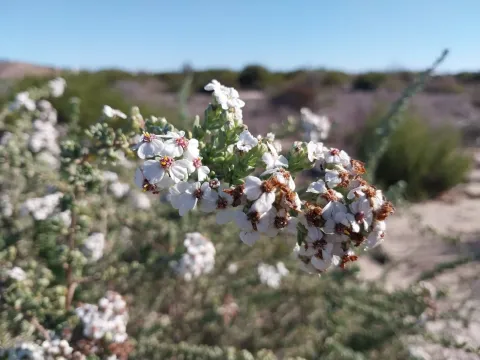
African wild rosemary
Eriocephalus africanus
Eriocephalus africanus, commonly known as African wild rosemary or Cape snow bush, is a perennial shrub belonging to the Asteraceae family. It is characterized by its silvery-grey foliage and unique, fluffy flower heads that resemble white wool or snow once the seeds develop.
What the section contains
African wild rosemary
Native to South Africa, the plant is naturally adapted to dry, stony slopes and sandy environments. It is a highly drought-tolerant species, making it an excellent candidate for xeriscaping and sustainable agricultural projects in arid Mediterranean-type climates.
The cultivation requirements are centered around excellent soil drainage. Eriocephalus thrives in sandy, rocky, or well-aerated loam soils. It is critical to ensure that the site does not hold water, as the plant is highly susceptible to root damage in waterlogged conditions.
Full sun is essential for the healthy development of this shrub. It requires intense light to maintain its compact, dense growth habit and to produce the essential oils that define its aromatic profile, similar to true rosemary but with its own distinct herbal notes.
Regarding agricultural practices, minimal irrigation is required once the plant is established. It is well-suited to low-nutrient soils and generally does not require heavy fertilization, as over-fertilizing can negatively impact the plant's natural resistance to environmental stress.
Root rot is the most significant threat to Eriocephalus africanus, typically caused by overwatering or poor soil drainage. If the soil remains saturated for extended periods, the root system begins to decay rapidly, leading to the sudden collapse of the plant.
Powdery mildew is a common fungal threat when plants are grown in environments with high humidity and poor airflow. Adequate spacing between plants is crucial to ensure proper ventilation and prevent the spread of fungal spores across the field.
Spider mites are the most frequent insect pests, thriving in the dry, warm conditions that the plant prefers. These mites suck sap from the foliage, causing discoloration and eventual leaf drop, which weakens the overall health of the shrub.
Aphid infestations may occur on new growth during the spring season. While these pests are usually manageable, their presence can attract secondary fungal infections, specifically sooty mold, which can further reduce the quality of the harvest.
Soil-borne nematodes can pose a problem in sandy soils if the site has not been properly prepared. Implementing crop rotation or soil solarization techniques before planting can significantly reduce the pressure from these subterranean pests.