
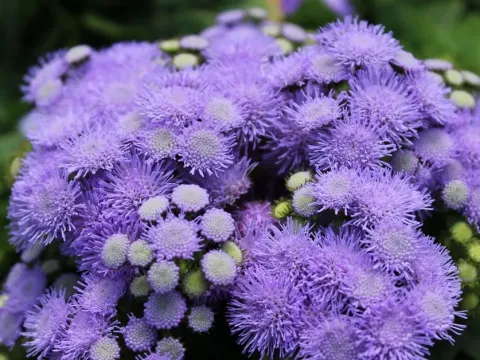
Ageratum hybrids
Ageratum hybrids
Ageratum hybrids are frost-tender annuals that are typically started indoors to ensure a long flowering season. Seeds should be sown in trays or plug cells in late March or early April.
What the section contains
Ageratum hybrids
The seeds are tiny and require light to germinate, so they should be pressed into the surface of the growing medium rather than buried deeply. Keeping the soil consistently moist is crucial at this stage.
Maintaining a temperature of about 20–22 degrees Celsius is ideal for successful germination. Using a humidity dome or covering the container with plastic helps retain moisture until sprouts appear.
Seedlings should be pricked out when they develop their first set of true leaves. This allows them more space and nutrients to develop a robust root system before transplanting.
Transplanting into the garden should only take place after all danger of frost has passed. Hardening off the plants by gradually exposing them to outdoor conditions for a week is highly recommended.
A member of the Asteraceae family, Ageratum hybrids originate from tropical regions of the Americas. They thrive in full sun, which promotes dense, compact growth and abundant floral production.
These plants prefer well-draining, moderately fertile soil. Avoid overly rich nitrogenous soils, as this encourages excessive foliage growth at the expense of flower formation.
While they are somewhat drought-tolerant once established, Ageratum benefits from regular watering during dry spells to maintain their vibrant color and overall vigor.
Regular maintenance involves deadheading spent blooms, which keeps the plants looking tidy and encourages the production of new flower buds throughout the summer and autumn.
The plants respond well to pruning or shearing, which can be used to reshape the plants and prevent them from becoming leggy as the season progresses.
Root rot is the primary disease concern for Ageratum, often caused by overwatering or poor soil drainage. It can quickly kill the plants if the drainage is not sufficient.
Pests like spider mites and whiteflies are common, particularly in hot and dry weather. They feed on plant sap, causing leaves to yellow and appear mottled or distorted.
Bacterial wilt can also affect the crop, leading to rapid decline. There is no cure for this, so affected plants should be removed and destroyed to prevent further spread.
Integrated pest management, including regular scouting and the use of appropriate insecticides when thresholds are met, is essential for maintaining plant health.
Proper spacing is vital to ensure adequate air circulation between plants, which reduces the humidity levels that favor many fungal and bacterial infections.