
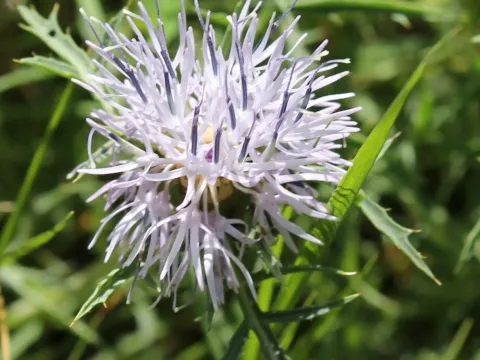
Carthamus carduncellus
Carthamus carduncellus
Carthamus carduncellus is a perennial herbaceous plant belonging to the Asteraceae family. It is recognized for its significant drought tolerance, which allows it to thrive in arid and semi-arid environments where other crops typically fail.
What the section contains
Carthamus carduncellus
The plant demonstrates a strong preference for well-drained, porous soils. It is particularly well-adapted to rocky, poor, or slightly saline substrates, reflecting its natural origin in Mediterranean and North African ecosystems.
Regarding climatic requirements, it thrives in full sun with high light intensity. Consistent temperatures within the range of 20 to 30 degrees Celsius during the growing season promote optimal development of the biomass and root system.
Water management is critical for this species; it requires very little additional irrigation once established. Any excess of soil moisture leads to oxygen deprivation in the root zone, significantly increasing the risk of plant loss.
Botanically, the species is characterized by deep taproots and succulent-like leaf structures designed to minimize water loss through transpiration. This anatomical adaptation is the key to its survival in harsh, sun-scorched habitats.
The main pathological risks for this crop are fungal diseases associated with excessive humidity and inadequate air circulation. Rust and leaf spot diseases are the most prevalent issues encountered in cultivation.
Pest pressure is primarily driven by insects targeting the floral parts, such as weevils and aphids. These pests can significantly reduce seed quality if left unchecked during the critical flowering stage.
Preventive agricultural practices are the most effective management strategy. This includes maintaining proper plant spacing to ensure airflow, which helps keep the foliage dry and minimizes fungal colonization.
Crop rotation remains the best tool to manage soil-borne pathogens. Avoid planting Carthamus in fields previously used for other Asteraceae members to break the life cycles of specific pests and diseases.
Integrated Pest Management (IPM) techniques should be prioritized over blanket chemical applications to preserve local pollinators, which are vital for the successful pollination and development of the seed heads.