
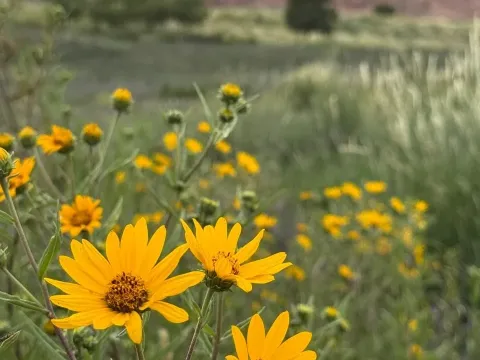
Aldama
Aldama La Llave
Aldama belongs to perennial or annual herbaceous plants, so the timing of sowing directly depends on the region of cultivation and the specific species within the genus. In natural conditions, seeds germinate with the onset of the rainy season, providing optimal moisture for root system development.
What the section contains

Aldama
When cultivating for agricultural purposes, it is important to consider that seeds require warmed soil. The optimal temperature for uniform emergence is 18–22 degrees Celsius.
Soil preparation begins well in advance, involving deep plowing to ensure aeration. Small Aldama seeds are planted at a depth of no more than 2-3 centimeters so as not to deplete the sprout's nutrient reserves before reaching the surface.
In regions with temperate climates, seedling propagation is possible to extend the growing season, allowing the plant to strengthen before the onset of critical weather conditions.
After sowing, it is recommended to roll the field to improve the contact of seeds with soil moisture, which is critical for plants of the Asteraceae family.
Aldama, as a member of the Asteraceae family, is a sun-loving crop. It demonstrates high resistance to direct sunlight, making it suitable for open areas.
The crop prefers well-drained soils with a neutral or slightly acidic reaction. Waterlogging on the plot is unacceptable, as it leads to rapid root rot and the development of pathogenic microflora.
The plant has moderate drought tolerance, but for maximum biomass, it requires regular but moderate irrigation during the active stem growth phase.
Soil fertility plays an important role: applying potassium-phosphorus fertilizers at the beginning of the growing season significantly stimulates the development of reproductive organs and strengthens the plant's immunity.
Wind load is not a critical factor, but in open areas, it is recommended to plant the crop considering row orientation to prevent lodging during heavy rainstorms.
The green mass yield of Aldama depends on the agrotechnical background and the intensity of care. With a proper level of agronomy, the crop is capable of providing several cuts per season.
The biological productivity of the species is due to a developed root system, which allows it to effectively absorb nutrients from deep soil layers even with moisture deficit.
The use of nitrogen top-dressing after each cut allows for a significant increase in the dry biomass output, which is rich in fiber and micronutrients.
In experimental plots, productivity indicators correlate with seeding density, where the optimal number of plants per hectare ensures maximum soil shading and weed suppression.
Yield stability is maintained for 3-4 years provided that crop rotation and timely application of organic fertilizers are observed.
The main danger to Aldama is fungal diseases, such as powdery mildew and various types of rot, occurring in high air humidity.
Among pests, aphids and spider mites are notable, as they actively colonize leaf blades in hot weather. Prevention includes timely treatment with contact insecticides.
Root-knot nematodes can affect the underground part of the plant in heavy soils, requiring agrotechnical measures for soil sanitation before sowing.
In dense plantings, the risk of rust infection increases, so it is important to maintain distance between rows to ensure air circulation.
An integrated protection system includes the use of biological preparations that effectively curb the number of harmful insects without harming beneficial pollinators.
Harvesting for green mass is carried out in the early flowering phase, when the concentration of nutrients in the stems reaches its peak.
To preserve the regenerative capacity of perennial forms, the cutting height is set at 10-15 centimeters from the ground surface so as not to damage the tillering nodes.
After mowing, the mass must be dried quickly to prevent oxidation processes and preserve the natural color and nutritional value of the plant raw material.
When harvesting seeds, heads are cut as they turn brown, as Aldama seeds are prone to rapid shattering when fully ripe.
Post-harvest handling includes cleaning seeds from impurities using special equipment and adjusting moisture to 12-14 percent for safe winter storage.