
African cotton lavender
Santolina africana
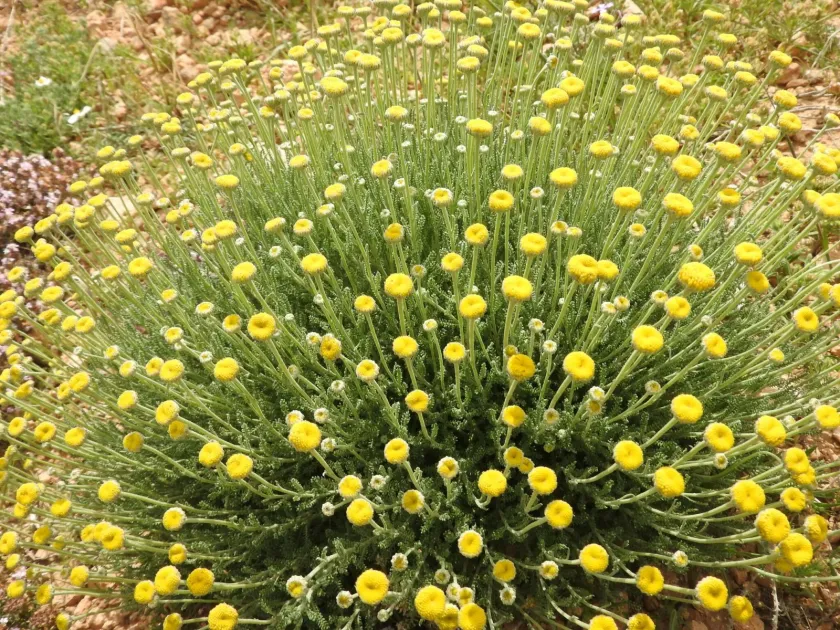
Description
Sowing dates
Sowing seeds of African cotton lavender is typically carried out in early spring, utilizing a light, sandy substrate that ensures optimal drainage conditions.
Seeds should be sown superficially, as they require sufficient exposure to sunlight for effective germination. It is advisable to cover the containers to maintain humidity.
The ideal temperature for germination ranges between 20 and 22 degrees Celsius. Initial seedlings usually appear within two to three weeks of initial planting.
Seedling thinning and repotting are performed once the second pair of true leaves develops, allowing the young roots to establish properly before transplanting outdoors.
Hardening off the plants is a critical step before moving them to their permanent location in the garden, which should happen after the last spring frost risk.
Growing requirements
Santolina africana, a member of the Asteraceae family, is a perennial subshrub native to Northern Africa, well-adapted to arid and harsh environmental conditions.
This species thrives in nutrient-poor, rocky, or sandy soils. Excellent drainage is non-negotiable, as excess moisture in the root zone can cause rapid decay.
Full sun exposure is mandatory for this crop, as insufficient light leads to spindly growth and a significant reduction in the production of essential oils.
Regular pruning is essential for maintaining the compact, rounded shape of the shrub and prevents the stems from becoming excessively woody over time.
In colder regions, this plant acts as a tender perennial, requiring protection during winter or cultivation in movable containers that can be sheltered indoors.
Main diseases and pests
The primary health threats to this culture include various root rot diseases, which are almost exclusively caused by poor soil drainage and waterlogging.
Aphids can sometimes infest tender new shoots during the spring growth flush, although the plant's strong scent often serves as a natural deterrent.
Powdery mildew may occur in conditions of high humidity combined with poor air circulation, necessitating better spacing between individual plants.
Occasional infestations of spider mites can occur in extremely hot and dry summer months, requiring targeted treatment with appropriate biological pesticides.
Regular monitoring of the foliage and root collar is the most effective management strategy to ensure the long-term health and vigor of the planting.
Harvesting
Harvesting for medicinal or aromatic purposes is best conducted at the peak of the flowering period when the concentration of essential oils is at its highest.
Clippings should be taken on dry mornings after dew has evaporated to ensure the highest quality of the harvested botanical material for further processing.
The harvested shoots are dried in well-ventilated, shaded areas, ensuring that the material is spread in a single layer to prevent mold formation during drying.
Once fully dried, the material must be stored in airtight containers away from direct light to preserve its characteristic fragrance and potent volatile compounds.
In landscape management, harvest cycles are often aligned with seasonal trimming to balance the plant's aesthetic maintenance with the collection of plant parts.