
Orange Agoseris
Agoseris aurantiaca
Description
Sowing dates
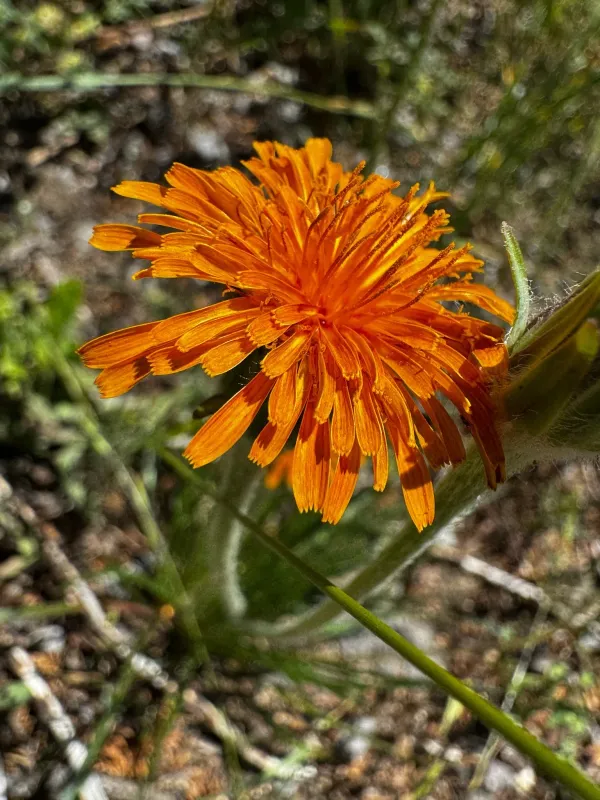
The orange agoseris, scientifically known as Agoseris aurantiaca, is a perennial herb belonging to the Asteraceae family. It is native to the mountainous regions of Western North America and is increasingly recognized for its ecological and ornamental value in diverse landscapes.
Propagation is primarily carried out through seeds. For successful germination, seeds often require a period of cold moist stratification to overcome natural dormancy mechanisms. Sowing is best performed in the early spring in well-prepared, loose soil.
The seeds should be sown shallowly, as they require light for optimal germination. Keeping the seedbed consistently moist without saturating it is crucial during the initial three-week period after sowing to support the development of the taproot system.
Once established, the plants form a low-growing basal rosette of leaves. Because of this specialized root structure, young seedlings are quite sensitive to disturbance, which is why direct seeding into the final growing site is highly recommended by agronomists.
Spacing should be managed to ensure adequate airflow, preventing the development of humidity-related pathogens. Depending on the soil fertility, a density of 10 to 15 plants per square meter is considered optimal for maintaining a healthy and productive perennial stand.
Growing requirements
Agoseris aurantiaca thrives in environments that mimic its natural alpine and subalpine habitats. This includes high solar exposure, as the species is intolerant of shade, which leads to reduced flowering and leggy, weak vegetative growth.
Soil requirements are specific: the plant demands excellent drainage. It is naturally adapted to gritty, sandy, or rocky soils that do not hold excessive moisture. In garden or agricultural settings, adding perlite or gravel to the soil mix is a common practice.
Climate adaptability is one of its primary strengths, as the plant is evolved to withstand significant temperature fluctuations typical of mountain environments. It is hardy in cold climates but requires a dormant period to reset its internal biological clocks.
Water management is the most critical aspect of its care. While the plant can tolerate short periods of drought, it should not be allowed to dry out completely during the peak blooming stage, yet waterlogging must be avoided at all costs.
Nutrient requirements are generally low. Over-fertilization, especially with nitrogen-based products, can lead to excessive succulent growth, which makes the plant more susceptible to both physical damage and environmental stressors like wind or frost.
Main diseases and pests
The primary threat to the orange agoseris in cultivation is root rot, typically caused by fungal pathogens such as Pythium or Phytophthora when drainage is compromised. Improving soil aeration is the most effective preventative measure.
Pests such as aphids may infest the flowering stalks during the active growing season. While usually not fatal, heavy infestations can reduce seed set and overall plant vitality, necessitating the use of targeted biological control agents.
Herbivores, particularly small rodents and deer, may graze on the young rosettes in early spring. Protecting young plantations with physical barriers or repellent sprays can significantly increase the survival rate of the culture.
Weed competition is particularly damaging during the first year of growth. Since the orange agoseris is a relatively slow-growing plant, it struggles to compete with faster-growing invasive grasses and broadleaf weeds for light and space.
Regular monitoring for leaf spots and yellowing is essential. In cases of pathogen outbreak, the immediate removal of infected biomass is advised to prevent the spread of spores, as the density of the rosette makes it hard for fungicides to reach all surfaces.