
Geitonoplesium cymosum
Geitonoplesium cymosum
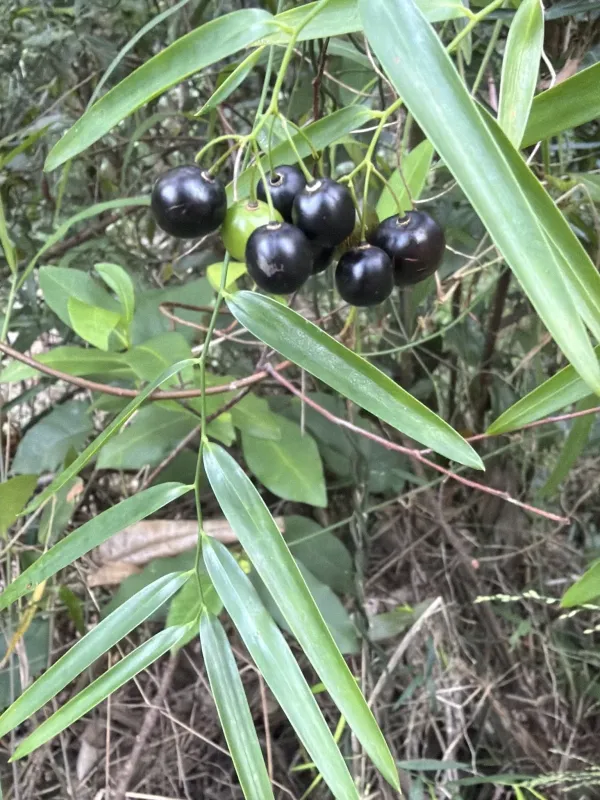
Description
Growing requirements
Geitonoplesium cymosum is a robust climbing plant belonging to the family Asphodelaceae. Native to the coastal regions and rainforests of Eastern Australia, it is commonly known as the scrambling lily due to its growth habit.
Botanically, it features slender, woody stems and lance-shaped leaves. The plant produces small, delicate, greenish or purplish-white flowers arranged in clusters, which eventually develop into dark, succulent berries that serve as a food source for local fauna.
The plant thrives in well-drained, nutrient-rich soils with consistent moisture. While it is adaptable, it prefers a shaded to semi-shaded environment, mimicking its natural habitat beneath the forest canopy. It is highly valued for its ability to climb fences and trellises.
Climate requirements include protection from severe frost and wind. In cultivation, it performs best in regions with mild winters and high humidity levels. Consistent growth is achieved when the soil temperature remains stable throughout the season.
Beyond aesthetics, this species is noted for its resilience. It is an excellent choice for vertical gardening in tropical or subtropical zones, requiring minimal maintenance once the root system has become established.
Main diseases and pests
Common pests include aphids and scale insects, which tend to congregate on the undersides of leaves. Early detection is crucial, and simple solutions like horticultural oils or soap-based sprays are generally effective in managing outbreaks.
Root rot is the most significant threat caused by poor drainage. Excess water prevents root respiration, leading to rapid decay. Ensuring a porous soil structure is the best preventative measure against soil-borne pathogens.
Leaf spot diseases, often triggered by prolonged humidity and lack of airflow, can degrade the foliage. Pruning the plant to maintain good structure and allowing for air circulation around the stems significantly reduces the risk of infection.
In certain habitats, snails and slugs can destroy new growth. Installing physical barriers or using organic bait can protect young plants from significant defoliation during the initial stages of development.
Overall, maintaining plant health through regular fertilization with a balanced mix and avoiding waterlogged conditions keeps the plant resistant to typical garden pests and fungal threats.