
Gasteria carinata var. verrucosa
Gasteria carinata (Mill.) Duval var. verrucosa (Mill.) Van Jaarsv.
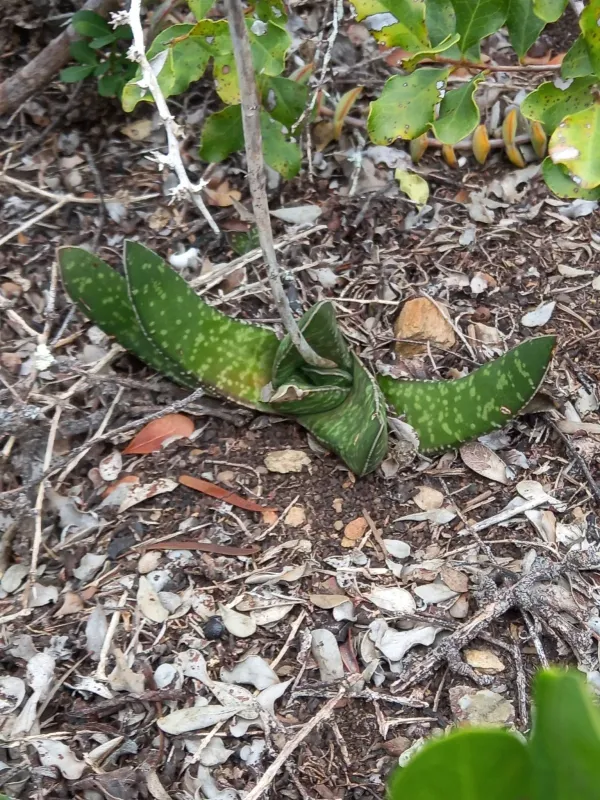
Description
Sowing dates
Propagation of Gasteria carinata var. verrucosa is most commonly achieved through the removal of offsets (pups) that grow around the base of the parent plant. This is the most effective and reliable method for home growers.
Seed propagation is possible but slow. Seeds should be sown in a sterile, well-draining sandy mix during the spring. Constant humidity and temperatures around 22–24 degrees Celsius are required for successful germination.
When separating offsets, it is crucial to allow the cut area to callus over for a few days before planting. This step prevents the introduction of moisture-borne pathogens into the succulent's fleshy tissue.
The choice of planting container is vital; wide and shallow pots are preferred over deep ones to ensure that soil moisture does not sit at the bottom for too long, risking root health.
After transplanting, it is recommended to keep the plant in a shaded area for a week to allow it to recover before moving it back to its standard lighting conditions.
Growing requirements
Gasteria carinata var. verrucosa is a member of the Asphodelaceae family. Originating from the arid regions of South Africa, it is evolutionarily adapted to survive long periods of drought.
The plant thrives in bright, indirect light. While it can handle some morning sun, harsh afternoon rays often lead to leaf scorch, damaging the distinctive, warty surface of the leaves.
Soil requirements are strict: the medium must be highly porous. A standard commercial succulent mix amended with perlite, pumice, or coarse river sand ensures the necessary aeration for the roots.
Temperature management is straightforward: the plant prefers room temperatures between 18 and 25 degrees Celsius. During winter, a cooler environment (around 10–12 degrees) helps the plant rest, which can stimulate future blooming.
Watering should be deep but infrequent. Always wait for the potting medium to dry out completely before watering again. During the winter dormant phase, water should be significantly reduced to avoid rot.
Main diseases and pests
Root rot remains the most common threat to this culture. It is almost exclusively caused by overwatering or soil that does not drain well. Symptoms include yellowing, mushy leaves, and a foul smell at the soil level.
Mealybugs are the primary pest concern for Gasteria. These pests hide in the crevices between the thick, fleshy leaves. Regular checks and cleaning with an alcohol-dipped swab are effective for minor infestations.
Scale insects can also attach themselves to the leaves. They appear as small, brown, hard bumps. These should be manually removed or treated with appropriate systemic horticultural sprays.
Fungal infections can develop in high-humidity, stagnant air environments. Good airflow is essential to keep the leaf surface dry and prevent the proliferation of spores.
If the plant is severely infested or shows signs of advanced rot, it is best to prune the healthy parts for propagation rather than attempting to save the entire damaged root system.