
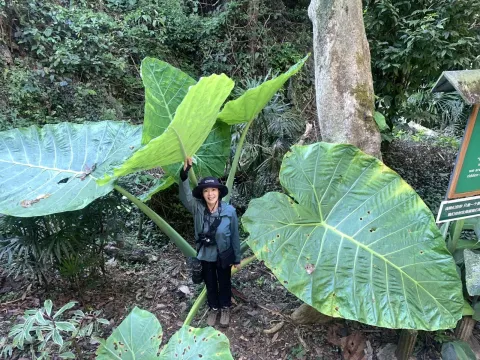
Giant Leucocasia
Leucocasia
Giant Leucocasia (Leucocasia gigantea) is a perennial tropical plant belonging to the Araceae family. It is recognized for its massive foliage and succulent petioles, originating from the humid rainforest regions of Southeast Asia.
What the section contains
Giant Leucocasia
This crop requires a tropical or subtropical climate with high temperatures and consistent moisture levels throughout the growing season. It performs best in areas where humidity remains high and direct sunlight is filtered to prevent leaf scorching.
The soil requirements for optimal development include high organic matter content, excellent drainage combined with water retention properties, and a slightly acidic pH. The plant thrives in alluvial soils found near riverbanks and wetland margins.
Agrotechnical management involves frequent irrigation and mulching to keep the root zone cool and moist. In farming settings, growers often utilize organic amendments to boost leaf production, which is the primary harvestable component of the plant.
Beyond its culinary uses, Leucocasia is also valued for its ornamental characteristics and its ability to act as a pioneer species in disturbed tropical habitats, contributing to soil stabilization in erosion-prone areas.
Pathogenic threats primarily include fungal infections such as root rot caused by stagnant water or poor air circulation around the root base. Proper spacing is essential to mitigate these risks in intensive cultivation.
Pest management should focus on preventing infestations of spider mites, aphids, and various species of lepidopteran larvae. Regular monitoring of the underside of leaves is recommended to detect these pests early in the development cycle.