
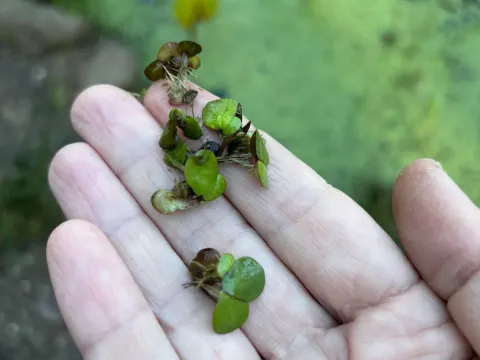
Giant duckweed
Spirodela Schleid.
Giant duckweed (Spirodela polyrhiza) is an aquatic plant from the Araceae family, characterized by its floating thallus with multiple downward-hanging roots. It is significantly larger than common duckweed species and serves as a vital component in aquatic ecosystems.
What the section contains

Giant duckweed
The plant is native to a wide range of temperate and tropical regions globally. It thrives in stagnant or slow-moving water bodies that are rich in nitrogen and phosphorus, making it an excellent candidate for phytoremediation of agricultural runoff.
Optimal growth requires high levels of solar radiation and water temperatures between 18°C and 28°C. It is highly sensitive to water quality, performing best in environments with neutral pH levels and low turbulence to maintain a healthy leaf surface.
When cultivated commercially, giant duckweed requires shallow basins with managed nutrient inputs. Farmers must ensure the water depth remains consistent to support stable floating colonies while preventing the plants from drifting into piles due to wind activity.
Agronomic management involves regular assessment of nutrient concentrations in the water column. Since Spirodela polyrhiza doubles its biomass rapidly, periodic harvesting is essential to prevent overcrowding and ensure continuous growth cycles throughout the season.
The high protein content and rapid doubling time make giant duckweed an exceptionally high-yielding aquatic crop. When maintained under ideal conditions, it can produce a substantial harvest of high-quality biomass suitable for animal feed supplementation.
Harvesting is typically performed using mechanical surface skimmers or suction systems designed to collect the floating biomass. This method ensures clean extraction of the plants without disturbing the bottom substrate of the cultivation basin.
Key threats include fungal diseases that can spread rapidly in dense, poorly ventilated mats. Insect larvae and certain types of snails can also cause significant damage by grazing on the fronds, requiring integrated pest management strategies to mitigate losses.