
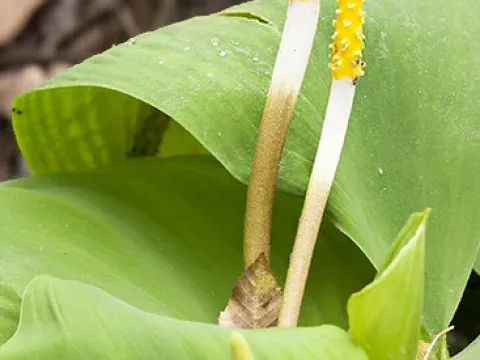
Golden club
Orontium
Sowing Orontium aquaticum seeds must be performed immediately after they ripen. The seeds lose viability very quickly if they dry out, so they should be planted in moist, nutrient-rich soil or directly into the pond substrate as soon as they are harvested.
What the section contains

Golden club
To germinate, seeds should be placed in shallow water or on saturated mud. Maintaining a temperature range of 20 to 25 degrees Celsius is optimal for the development of the primary root and the first leaves.
Vegetative propagation via rhizome division is often preferred for domestic cultivation. This process is best performed in early spring, just before the plant begins its active growth phase, ensuring the division includes a healthy growth bud.
When planting, ensure the growth point is properly oriented relative to the water level. The plant requires a stable environment to establish itself, so avoid turbulent water areas during the first few weeks of its growth.
Successful establishment depends on the depth and soil quality. Once the seedlings develop several leaves, they can be submerged deeper into the water, following the plant's natural preference for shallow aquatic zones.
The Golden Club is a perennial aquatic plant belonging to the Araceae family, native to North American wetlands. It thrives in shallow, clear, and slow-moving or standing waters, typically found in acid-rich swamp environments.
The plant prefers full sun to light shade. It is vital to provide a growing medium that is loose and organic but not overly decomposed, as excessive organic matter can lead to water quality issues and root stress.
Water requirements include a slightly acidic pH (between 6.0 and 7.0) and high oxygen levels. Unlike many other aquatics, Orontium cannot tolerate highly polluted or stagnant water, as it relies on clean water to prevent suffocation of its roots.
Cold hardiness is one of the key characteristics of this species. In temperate regions, it remains dormant throughout the winter and can survive if the rhizome is situated in the non-freezing benthic zone of a pond.
Space and stability are crucial for long-term growth. Because the root system is robust, providing a large container or enough space in the pond bottom ensures the plant has access to essential nutrients for seasonal growth.
Snails and other aquatic invertebrates are the primary pests that can feed on the leaves of the Golden Club. Monitoring the plant foliage regularly helps identify these pests before significant damage is done to the structure.
Root rot is the most serious threat, usually caused by poor water circulation or an accumulation of toxic substances in the substrate. If rot is detected, it is necessary to prune the affected parts and ensure better water aeration.
Fungal pathogens may emerge in environments with poor light and lack of biological diversity. Providing sufficient sunlight and maintaining clear water conditions are the best preventive measures against such infections.
Chlorosis, which presents as yellowing leaves, is often a sign of nutrient deficiency, particularly iron. Applying aquatic plant-specific fertilizer tablets directly into the substrate can help restore the plant's vitality.
Invasive algae competition represents a major threat in smaller ponds. Algae can cover the surface and block photosynthesis, so manual removal of excessive algae is required to keep the Golden Club healthy and thriving.