
Cryptocoryne wendtii
Cryptocoryne wendtii de Wit
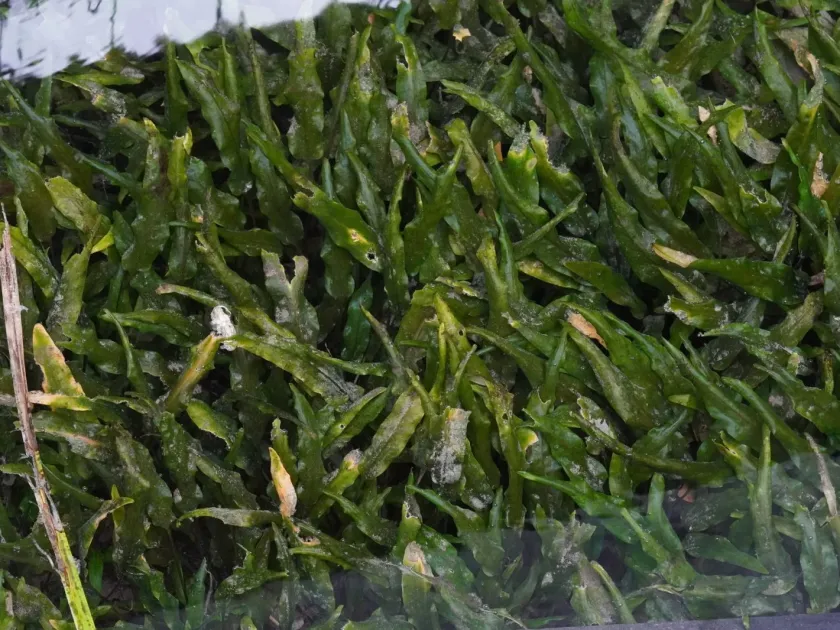
Description
Growing requirements
Cryptocoryne wendtii belongs to the Araceae family. This species is native to the tropical islands of Sri Lanka, where it primarily inhabits streams and riverbanks with varying water levels.
The plant thrives in nutrient-rich substrate composed of fine gravel mixed with clay or specialized aquatic soil. A deep layer of substrate (at least 6 cm) is essential to provide adequate anchorage and nutrition for the extensive root system.
Environmental conditions require stable water temperatures between 22°C and 28°C. While the plant can tolerate low-light conditions, it exhibits more compact and vibrant growth when exposed to moderate light intensity for 8 to 10 hours daily.
Water quality parameters, such as pH levels between 6.0 and 7.5, should be kept consistent. Sudden changes in water chemistry can trigger physiological stress, causing the plant to shed its leaves in an attempt to adapt to the new environment.
Propagation is mainly vegetative through the production of plantlets along the rhizome. Gardeners can separate these offsets once they have developed a small root system of their own, allowing for steady propagation within the tank.
Main diseases and pests
The most common issue is the phenomenon known as "crypt melt," where the leaves suddenly dissolve into a mushy state. This is typically a stress response triggered by major environmental fluctuations, such as improper water chemistry shifts or inadequate lighting.
Root rot is a significant risk caused by compacted or anaerobic substrate. Ensuring proper circulation within the substrate layer and preventing the accumulation of decaying organic matter is critical for maintaining healthy plant growth.
Nutrient deficiencies, particularly involving iron and potassium, lead to chlorosis and stunted leaf development. Regular use of root tabs ensures the plant receives the specific minerals required for its metabolic processes.
Algae proliferation, including hair algae or staghorn algae, poses a threat by shading the plant and hindering gas exchange. Control measures include adjusting lighting schedules and ensuring nutrient levels are balanced to outcompete algae growth.
In terrestrial or semi-aquatic setups, common pests like aphids or spider mites can infest the foliage. Manual removal and maintaining proper environmental humidity levels are usually sufficient to manage these infestations without chemical intervention.