
Caladium
Caladium bicolor (Aiton) Vent.
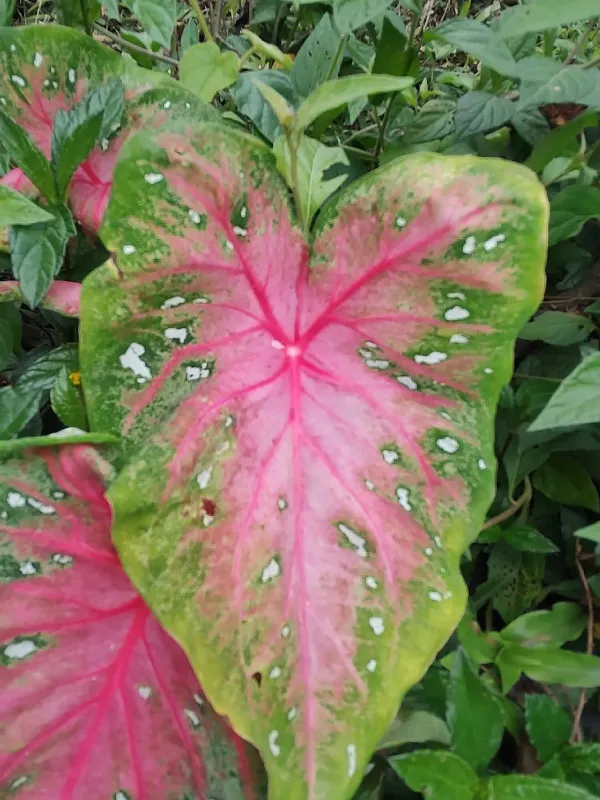
Description
Sowing dates
Caladium belongs to the Araceae family and is a perennial tuberous plant. In commercial and ornamental settings, propagation is primarily achieved through the division of tubers in the spring, just before the start of the active vegetation period.
Planting tubers into soil or containers should occur when the substrate temperature reaches 20–25°C. For open-field or greenhouse environments, the optimal time is late spring, ensuring all frost risks have passed.
Tubers are planted at a depth of 5–7 cm with proper drainage, as stagnant water poses a significant risk of rot to the delicate tuber tissue during the initial development phase.
To ensure uniform emergence, professional growers often pre-sprout tubers in moist peat or vermiculite, which helps in achieving consistent growth rates across the entire crop.
Seed propagation is primarily reserved for breeding purposes. Seeds must be sown immediately after harvest, as they have a very short lifespan and lose germination capacity quickly.
Growing requirements
As a native of the Amazon basin, Caladium is highly sensitive to temperature fluctuations. The optimal growth range is between 22–28°C; temperatures dropping below 15°C will severely inhibit plant metabolism.
The culture thrives in light, nutrient-rich, and slightly acidic soils with high organic matter content. Excellent aeration and water permeability are essential to prevent root asphyxiation.
Bright, indirect light is required to maintain the vibrant leaf coloration. While full sun causes leaf scorch, insufficient light leads to attenuated stems and loss of characteristic color intensity.
High humidity levels (70–80%) are crucial for Caladium development. In low humidity environments, leaf margins tend to crisp and turn brown, significantly reducing the commercial quality of the crop.
Controlled irrigation is vital. The substrate should be kept consistently moist but never waterlogged, as excessive dampness in cooler conditions is the leading cause of crop failure.
Main diseases and pests
The main threats to Caladium are fungal pathogens such as Fusarium, Pythium, and various bacterial soft rots. These are primarily induced by over-irrigation and poor drainage in the growth medium.
Pest pressures include spider mites, which flourish in low-humidity conditions, as well as mealybugs and aphids that infest foliage and significantly reduce photosynthetic efficiency.
Preventative measures include the use of sterilized potting mixes and the application of systemic fungicides to tubers prior to planting to ensure a healthy start to the growing season.
Integrated pest management (IPM) should be employed, utilizing both biological controls and targeted insecticides when threshold levels of infestation are observed.
Sanitation is key: regularly removing infected or dying leaves and isolating affected plants is necessary to prevent the rapid spread of pathogens within high-density production zones.
Harvesting
Harvesting of tubers takes place in the autumn as the foliage begins to senesce naturally. This phase is critical as the plant redirects energy from the leaves back into the storage tuber.
Once the foliage has withered, watering is gradually ceased. Tubers are carefully lifted from the soil, cleaned, and cured in a well-ventilated area at room temperature for several days.
For storage, tubers should be layered in dry peat, vermiculite, or wood shavings to maintain structural integrity and prevent desiccation during the dormant period.
Storage temperatures must be maintained between 15–17°C. Cold storage conditions below 12°C will lead to chilling injury and irreversible cell death in the tubers.
Proper curing and storage ensure that the dormancy period is successful, allowing the tubers to regain their full physiological potential for the subsequent planting cycle.