
Caladium humboldtii
Caladium humboldtii (Raf.) Schott
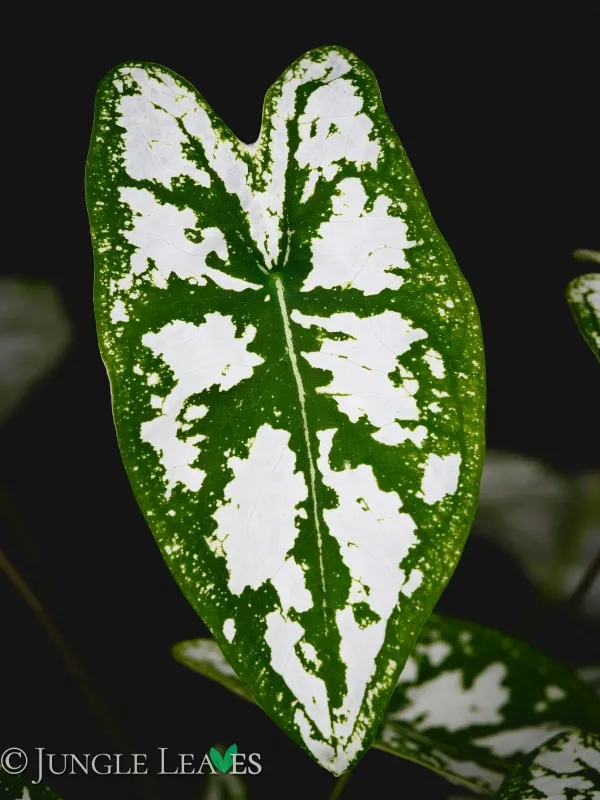
Description
Growing requirements
Caladium humboldtii is a miniature ornamental species belonging to the Araceae family. Native to the tropical rainforests of South America, this plant is primarily valued for its striking, patterned foliage that brings a tropical aesthetic to any collection.
The cultural requirements for this plant are stringent, focusing heavily on humidity and light. To maintain its vibrancy, the plant must be kept in an environment with humidity levels consistently above 70 percent, away from direct, harsh sunlight which scorches the leaves.
Temperatures should remain within the range of 22 to 26 degrees Celsius. Caladium humboldtii enters dormancy when temperatures drop significantly, during which the foliage will die back; this is a natural biological cycle that must be respected by the grower.
The substrate must be light, porous, and nutrient-rich, mimicking the leaf litter of its natural forest floor habitat. Proper drainage is essential to prevent water stagnation around the tuber, which is highly susceptible to rot if kept in soggy conditions.
Regular fertilization with a balanced, water-soluble fertilizer during the active growing season is recommended to support leaf development. However, concentrations should be kept low to avoid fertilizer burn on the delicate root system.
Main diseases and pests
The primary agricultural threats to Caladium humboldtii include fungal pathogens like Pythium and Phytophthora. These are almost exclusively linked to overwatering and inadequate soil drainage, requiring strict control over irrigation timing.
Pest pressure is mostly dominated by spider mites and mealybugs, particularly when the ambient air is dry for extended periods. These pests feed on sap and can cause significant foliage disfigurement if left untreated for long.
Integrated pest management involves the periodic use of insecticidal soaps or neem oil as a preventive measure. Growers should ensure that the plant's environment has sufficient air circulation to discourage both fungal growth and pest infestations.
Leaf spot diseases can also occur if water remains on the foliage for long periods, especially in low-light conditions. Ensuring that the leaves dry quickly and maintaining proper hygiene in the growing area are critical management steps.
During the dormancy phase, tubers should be kept in a dry, cool, and dark storage area. Inspecting them regularly ensures that there is no mold development and that the tubers remain firm, ensuring healthy growth upon the return of the growing season.