
Linden's Caladium
Caladium lindenii (André) Madison
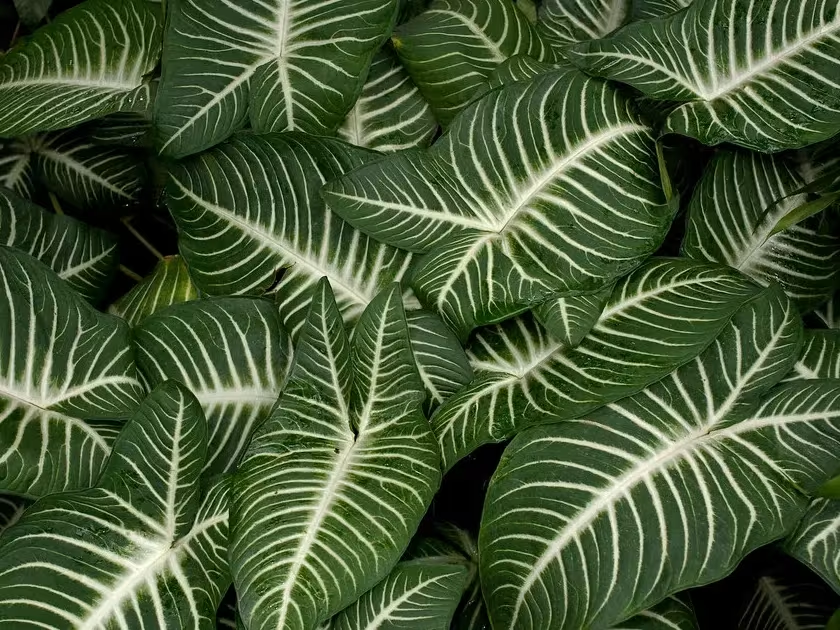
Description
Growing requirements
Linden's Caladium, botanically identified as Caladium lindenii (syn. Xanthosoma lindenii), belongs to the Araceae family. This ornamental tropical perennial originates from the rainforests of Colombia, where it thrives in consistently warm and humid conditions.
For optimal growth, the species requires a warm environment with temperatures maintained between 20°C and 28°C. Exposure to temperatures below 15°C will induce dormancy or cause severe damage to the plant's delicate vascular system.
The substrate must be well-draining, rich in organic matter, and slightly acidic. A mix consisting of peat moss, perlite, and pine bark is typically recommended to simulate the natural forest floor habitat and prevent root hypoxia.
High relative humidity is essential for the plant's vitality. In controlled environments, growers should utilize misting systems or humidifiers to maintain a humidity level above 60% to prevent leaf edge necrosis.
The plant requires bright, indirect sunlight to maintain its signature white venation on the foliage. Intense direct sun exposure should be avoided as it leads to leaf scorching, while insufficient light may result in the loss of variegation.
Main diseases and pests
Spider mites are the most persistent pest for Linden's Caladium, thriving in indoor environments where humidity levels are inconsistent. These mites puncture the cells on the underside of leaves, leading to chlorosis and eventual senescence of the foliage.
Root rot, primarily caused by Pythium and Phytophthora species, remains the most significant threat to the plant's health. Over-watering and inadequate soil drainage are the primary facilitators for the development of these soil-borne pathogens.
Management of these threats involves a combination of cultural practices and chemical intervention. Proper spacing between plants improves air circulation, which helps lower the risk of fungal leaf spot diseases in enclosed spaces.
If infestations occur, neem oil or specific acaricides can be used to manage mite populations without damaging the plant's sensitive leaf cuticle. It is crucial to treat the entire plant thoroughly, focusing on the leaf undersides.
Regular sanitation, including the removal of dead or decaying leaf material from the soil surface, prevents the buildup of fungal spores. Ensuring that the potting media is sterilized prior to planting further reduces the incidence of soil-borne pests.