
Anubias barteri
Anubias barteri Schott
Description
Growing requirements
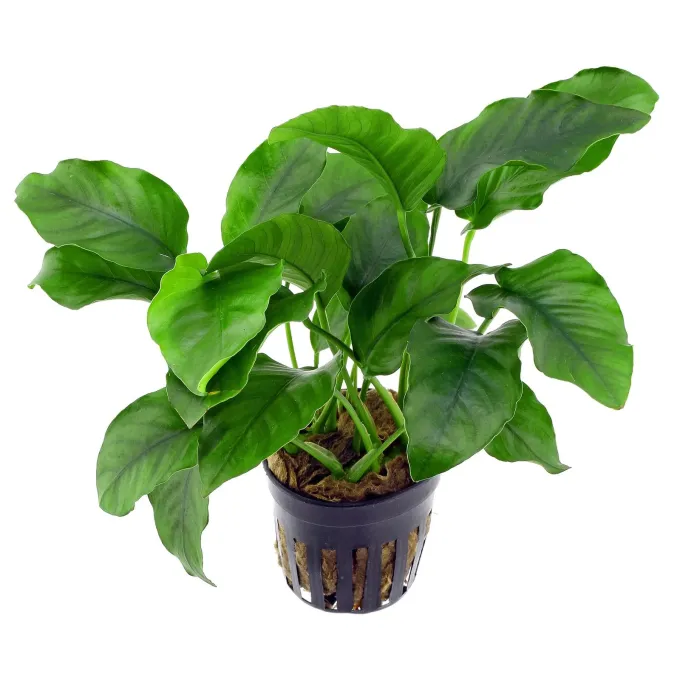
Anubias barteri is a perennial aquatic and semi-aquatic plant belonging to the Araceae family. It is native to the tropical rainforests of West Africa, where it typically inhabits the shaded banks of rivers and streams, thriving in damp, humid environments.
The plant is characterized by a thick, creeping rhizome from which deep green, leathery leaves emerge. These leaves are exceptionally durable, making the plant a preferred choice for various agricultural and decorative aquatic settings due to their resistance to damage.
The optimal growth temperature for Anubias barteri ranges between 22 and 26 degrees Celsius. It is highly adaptable to various water hardness levels but requires consistent environmental parameters to prevent leaf degradation and root stress.
Lighting requirements are minimal compared to other aquatic crops. Low to moderate light is sufficient, as excessive illumination often promotes the growth of algae on the slow-growing leaves, which can inhibit the plant’s ability to photosynthesize effectively.
Cultivation technique involves attaching the rhizome to a firm surface such as driftwood or volcanic rock. It is crucial never to bury the rhizome directly into the substrate, as this will lead to rapid decay of the plant tissues and eventual crop failure.
Main diseases and pests
Algae infestation is the primary threat to Anubias crops. Green spot algae and black beard algae often settle on the leaf surfaces, especially when light levels are too high or when there is an imbalance in nitrate and phosphate concentrations in the water.
Rhizome rot is a severe disease caused by poor water circulation or mechanical damage to the plant. Affected areas should be pruned immediately with a sterilized tool to prevent the pathogen from spreading throughout the entire healthy rhizome system.
Although the plant is quite hardy, it can suffer from nutrient deficiencies. A lack of iron or potassium typically manifests as yellowing or browning leaf edges, requiring careful adjustment of liquid fertilizer regimes to restore the plant’s vitality.
In humid greenhouses or paludariums, aphids may occasionally attack the tender shoots or flowers of the plant. These pests should be managed using biological controls or mild, water-safe insecticidal soaps to avoid contaminating the growing environment.
Physical trauma during harvest or transplantation can also serve as a gateway for opportunistic infections. Maintaining clean water parameters and ensuring gentle handling are the most effective prophylactic measures against all forms of biotic and abiotic stress.