
Anubias barteri var. nana
Anubias barteri Schott var. nana (Engl.) Crusio
Description
Growing requirements
Anubias barteri var. nana is a hardy, rhizomatous aquatic plant belonging to the Araceae family. It is native to tropical West Africa, where it inhabits shaded riverbanks and swampy areas, demonstrating high adaptability to fluctuating water levels.
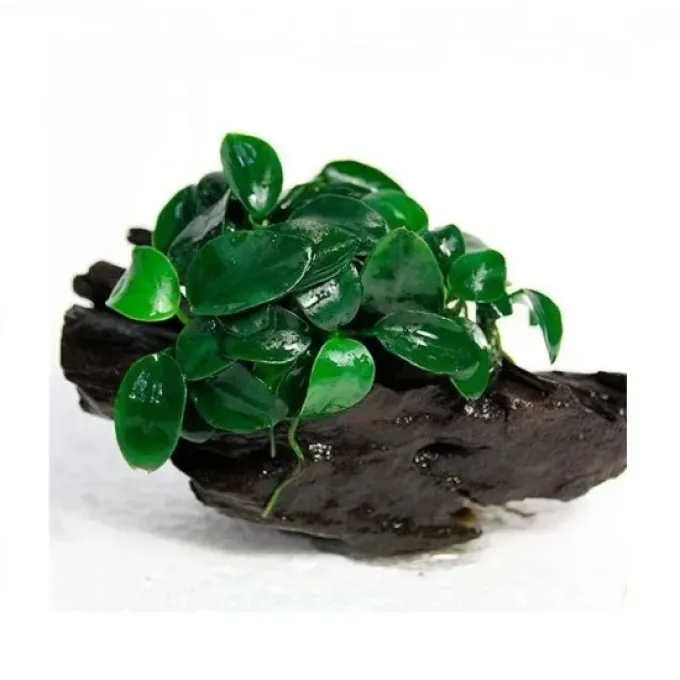
The plant features a creeping rhizome and thick, leathery, dark-green leaves. Its slow growth rate and resilience make it a staple in both professional aquascaping and hobbyist fish tanks.
Ideal cultivation requires a temperature range of 22–28°C and moderate, indirect lighting. Direct sunlight or intense LED light is strongly discouraged as it promotes the colonization of nuisance algae on the foliage.
The key to successful horticulture is the correct placement of the rhizome. It must remain above the substrate; burying it often leads to decay. Attaching the plant to driftwood or volcanic rocks using fishing line or cyanoacrylate gel is standard practice.
Anubias is considered a low-maintenance crop. While it benefits from supplemental CO2 and nutrients, it thrives in stable water conditions and does not require frequent pruning or intensive fertilizing.
Main diseases and pests
The most common issue encountered during cultivation is the growth of epiphytic algae, such as staghorn or black brush algae, which thrive when lighting levels are poorly calibrated.
Rhizome rot, often triggered by poor water circulation or damage to the tissue during propagation, can quickly lead to the decline of the entire plant if not addressed by removing the infected parts.
In semi-aquatic setups or high-humidity greenhouse environments, pests such as aphids and spider mites can attack the emergent leaves, necessitating the use of appropriate biological or chemical controls.
Nutrient deficiencies, specifically a lack of potassium or iron, manifest as yellowing or necrotic spots on the leaves, impacting the photosynthetic capacity of the specimen.
Environmental stress, such as sudden changes in water parameters or significant temperature fluctuations, can cause the leaves to melt or detach from the rhizome, marking a severe health decline.