
Anubias barteri
Anubias barteri Schott var. barteri
Description
Growing requirements
Anubias barteri is a perennial aquatic or semi-aquatic plant belonging to the Araceae family. It is native to the tropical regions of West Africa, where it thrives in shaded areas along riverbanks, often found partially submerged in moist environments.
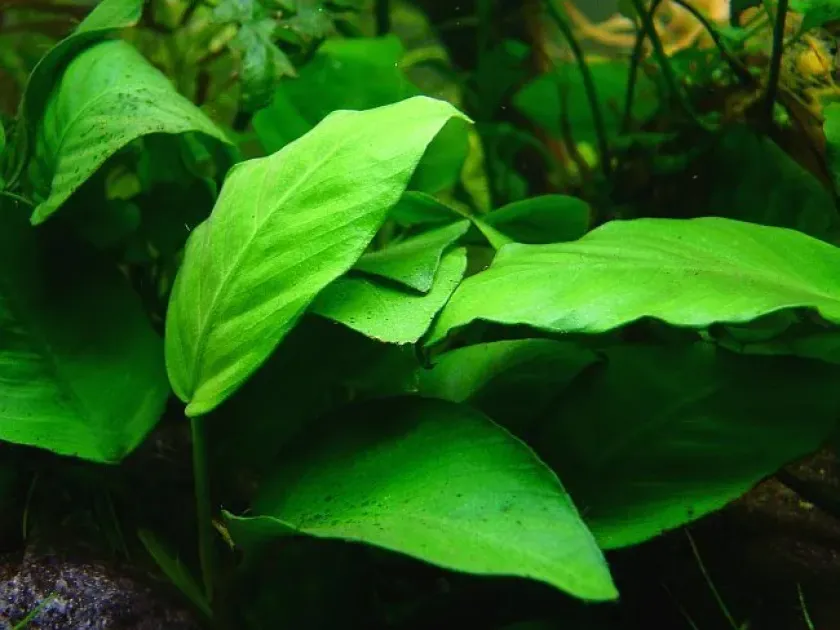
The plant features a creeping, fleshy rhizome from which thick, dark green leathery leaves emerge. This hardy structure allows it to thrive in various conditions, making it one of the most resilient plants used in professional aquatic cultivation and aquarium landscaping.
Optimal cultivation requires stable temperatures between 22°C and 28°C and moderate, indirect lighting. Excess light intensity is generally discouraged, as it can hinder the plant's natural growth cycles and favor competing algae growth.
The agricultural practice for Anubias involves epiphytic cultivation. The rhizome must remain above the substrate; burying it in sand or soil typically leads to rotting. Instead, growers attach the rhizome to driftwood, rocks, or synthetic substrates using professional-grade twine or clamps.
Propagation is achieved through vegetative division of the rhizome. Each segment must contain healthy leaves and functional root nodes to ensure successful establishment. Due to the plant's slow metabolism, growth is deliberate, requiring patience and consistent environmental maintenance.
Main diseases and pests
The primary threat to Anubias barteri is algae colonization, particularly hair algae and black beard algae, which grow on the surface of the slow-growing, rigid leaves. Managing nutrient balance and lighting duration is essential to prevent these infestations.
Rhizome rot is a significant physiological disorder resulting from improper planting depth. If the rhizome is buried too deeply, the lack of oxygen circulation around the stem causes soft tissue decay and eventually the death of the entire specimen.
In humid greenhouse environments, pests such as aphids and spider mites may target young, succulent leaf growth. Integrated pest management strategies that avoid harsh chemicals are preferred to maintain the plant's health and safety.
Nutrient deficiencies, specifically in trace elements like iron and potassium, can manifest as chlorosis or stunted leaf development. A balanced fertilization program tailored to the needs of slow-growing epiphytes is recommended for optimal yield and aesthetic quality.
While the plant is tough, physical damage to the rhizome is permanent. Careful handling during harvest or division is required to avoid tissue bruising, which can serve as a point of entry for secondary bacterial or fungal infections.