
Heterophyllous Anubias
Anubias heterophylla Engl.
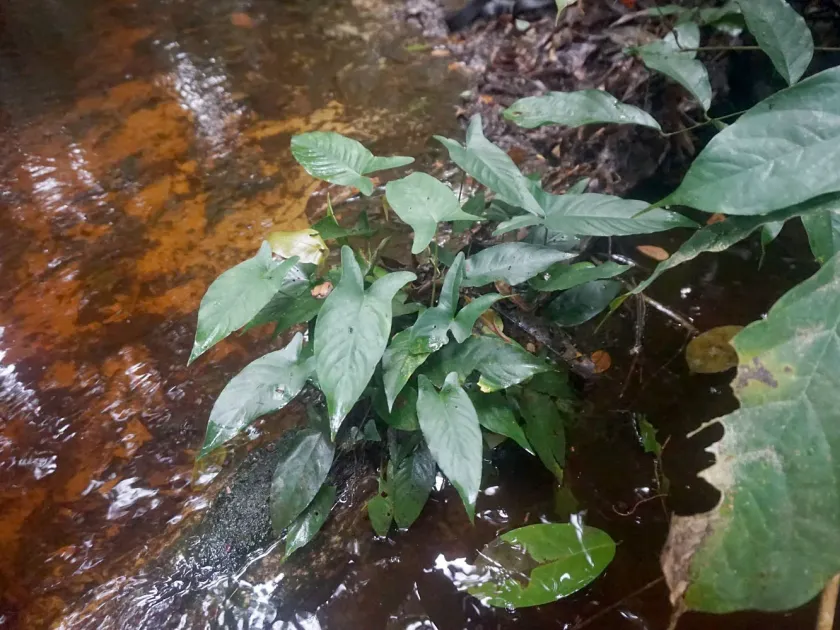
Description
Growing requirements
Anubias heterophylla belongs to the Araceae family. This perennial marsh plant is native to the tropical forests of Western and Central Africa, where it typically inhabits the banks of rivers and streams as a rheophyte.
The plant is biologically adapted to both fully submerged growth and semi-aquatic environments in humid greenhouses. Its root system consists of a creeping, fleshy rhizome that supports adventitious roots and distinct petiolate leaves.
Successful cultivation requires stable water parameters: temperatures ranging from 22–28°C and soft to medium water hardness. The plant is sensitive to intense lighting, which encourages algal growth on the leaves, so diffused or moderate light is recommended.
When grown in aquariums, neutral substrates are preferred, though the plant thrives best when the rhizome is attached to rocks or driftwood. Burying the rhizome deeply in the substrate should be avoided to prevent tissue rot.
Proper water circulation is essential to maintain the health of the species. Stagnant water areas lead to the accumulation of organic matter, increasing the risk of bacterial infections; therefore, efficient filtration is a key component of its agronomy.
Main diseases and pests
The primary biological threat to Anubias is rhizome rot, often triggered by unstable water parameters or poor maintenance practices. Infected rhizomes become soft, mushy, and show signs of tissue decay.
Common pests in paludarium or greenhouse conditions include spider mites and aphids, which feed on the leaf blades. In submerged aquarium environments, the main challenge is the infestation of leaves by filamentous algae, usually resulting from nutrient imbalances.