
Anubias gracilis
Anubias gracilis
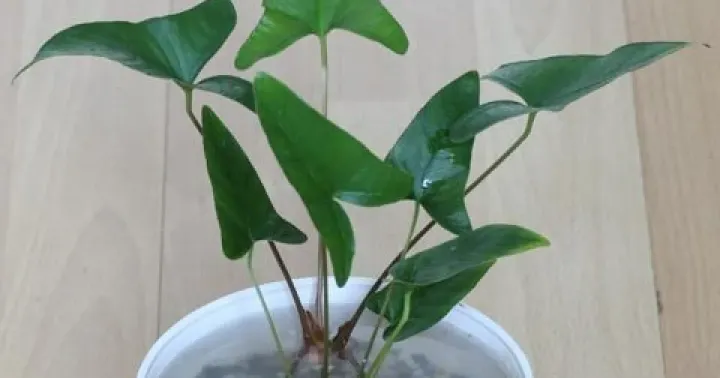
Description
Growing requirements
Anubias gracilis is a perennial aquatic plant belonging to the Araceae family. It is native to tropical West Africa, where it thrives in shaded areas along riverbanks, often growing in a semi-submerged or fully aquatic state.
The plant is distinguished by its unique arrow-shaped leaves and a creeping rhizome that serves as its primary structural component. Its growth rate is generally slow, making it a reliable and low-maintenance choice for aquascaping enthusiasts.
For successful growth, it requires stable water parameters, with temperatures ranging from 22 °C to 26 °C. It prefers moderate, diffused lighting to prevent the development of algae on its slow-growing, leathery foliage.
In terms of substrate, it should not be planted directly into deep sand or gravel. The rhizome must remain above the substrate, often attached to driftwood or rocks using fishing line to allow roots to absorb nutrients directly from the water column.
Regular maintenance involves light water flow and consistent water chemistry. It adapts well to various conditions, provided that sudden changes in pH and hardness are avoided, which could otherwise shock the plant.
Main diseases and pests
The primary threat to Anubias gracilis is rhizome rot, which typically occurs when the plant is buried too deeply or when organic waste accumulates around the roots in a stagnant substrate.
Algae infestations, particularly spot algae or hair algae, can compromise the aesthetic quality of the leaves if the light-to-nutrient ratio in the tank is imbalanced.
Nutrient deficiencies, such as a lack of iron, often result in chlorosis, where the leaves turn pale while the veins remain green, signaling a need for micronutrient supplementation.
While the plant is generally hardy, fungal or bacterial infections can occur if the water quality is poor or if the rhizome is physically damaged during handling or pruning.
Good agricultural practices include regular water changes, monitoring nutrient levels, and ensuring that the plant is not kept in conditions where high levels of nitrates can foster bacterial growth on damaged tissues.