
Anubias hybrids
Anubias hybrids
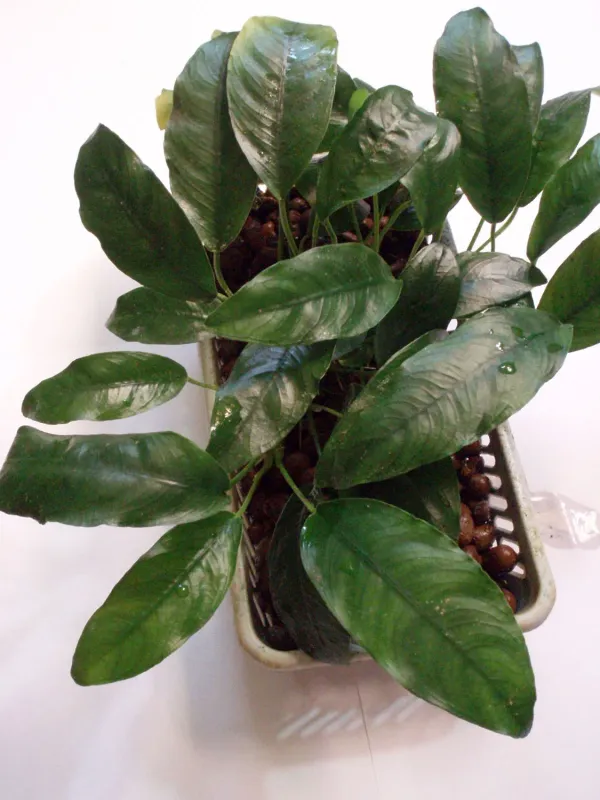
Description
Growing requirements
Anubias hybrids belong to the Araceae family and are popular ornamental aquatic plants widely grown in nurseries for the aquarium trade. These hybrids are prized for their varied leaf shapes and slow, stable growth rate.
The original species are native to the tropical regions of Africa, where they grow in shaded, humid habitats along riverbanks. Commercial production often employs semi-aquatic methods to maximize plant density and health.
Environmental requirements include a consistent tropical temperature, ideally between 22 and 28 degrees Celsius. Humidity control is crucial when plants are cultivated in an emersed form within greenhouse environments.
For growing, use porous substrates like volcanic rock or specialized aquatic soil. It is critical to ensure that the rhizome remains above the substrate surface to facilitate proper nutrient uptake and prevent decay.
Lighting should be managed to avoid direct, harsh light. Low to moderate light intensity is preferred to minimize the accumulation of biofilm and algae on the leaf blades, which can inhibit photosynthesis.
Main diseases and pests
Rhizome rot is the most common condition affecting Anubias hybrids. It is typically caused by poor water circulation or burying the rhizome too deeply in a dense, oxygen-depleted substrate.
Pests such as spider mites can infest plants maintained in an emersed state, especially when the ambient humidity levels are not maintained consistently.
Algal blooms, such as black beard algae, can attach to the leaves. These organisms compete for nutrients and light, drastically reducing the aesthetic and commercial value of the crop.
Mineral imbalances in the water supply often result in deficiency symptoms, such as leaf yellowing (chlorosis), which require adjustments in fertilizer application and water chemistry.
Preventative maintenance involves careful handling during propagation to avoid mechanical damage, which serves as a gateway for pathogens to enter the plant's vascular system.