
Anubias afzelii
Anubias afzelii
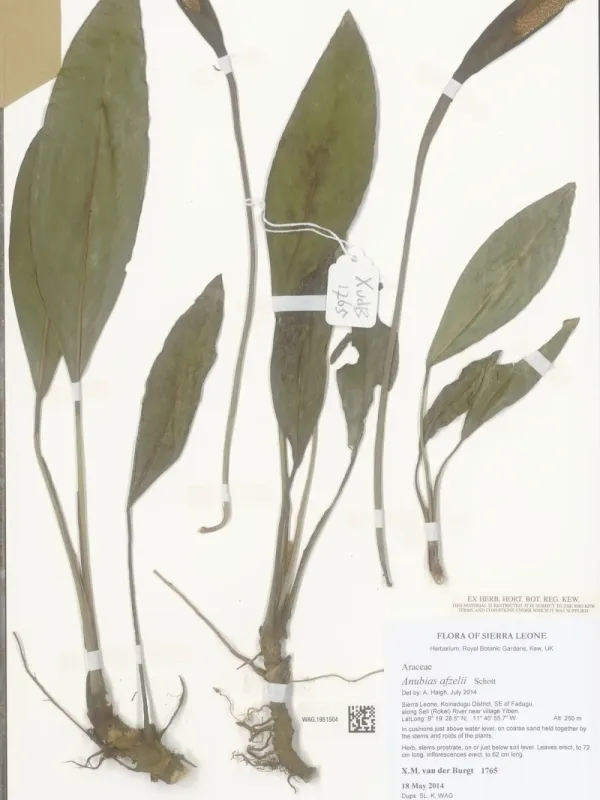
Description
Growing requirements
Anubias afzelii is a perennial swamp plant belonging to the Araceae family. This species originates from the tropical regions of West Africa, where it thrives in the banks of rivers and streams, adapting effectively to both submerged and emersed growth conditions.
Botanically, this plant is characterized by large, lanceolate leaves with a firm, leathery texture. Its creeping rhizome is a defining feature, allowing it to anchor onto driftwood or rocks, making it an extremely popular choice for aquascaping and professional aquarium plant management.
The cultivation requirements focus on stability, with an ideal water temperature range between 22 and 28 degrees Celsius. Providing moderate light is essential, as excessive illumination tends to promote algae growth on the leaves, which significantly impacts the plant's health and aesthetic appeal.
Regarding substrate requirements, the rhizome must remain above the soil surface to prevent rot. While it benefits from nutrient-rich water, the plant obtains most of its nutrition through the water column, necessitating careful management of micronutrients and consistent CO2 levels for optimal growth.
Good agricultural practices for this plant involve maintaining a pH level between 6.0 and 7.5 and keeping water hardness within moderate limits. Due to its slow growth rate, the plant is relatively low-maintenance, requiring minimal pruning but high consistency in water quality parameters.
Main diseases and pests
The primary threats to Anubias afzelii are epiphytic algae, such as black beard algae, which can rapidly cover the leaves and inhibit photosynthesis. Maintaining a proper balance of nutrients and light duration is the most effective way to prevent these infestations.
Bacterial decay of the rhizome can occur if the plant is buried too deeply or if the water circulation is poor. Keeping the rhizome exposed to water flow and ensuring it is not damaged during maintenance are the primary defensive measures against such biological threats.