
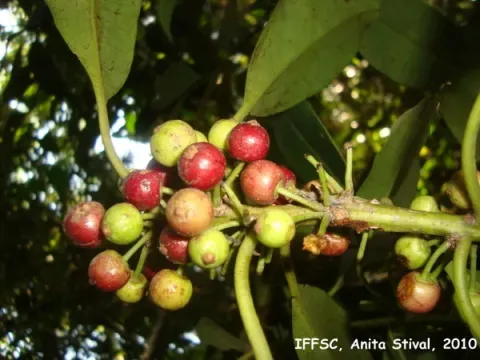
Ilex theezans
Ilex theezans
Ilex theezans belongs to the Aquifoliaceae family. It is a perennial evergreen shrub or small tree, native to the tropical and subtropical forests of South America, with a natural distribution spanning through regions of Brazil.
What the section contains
Ilex theezans
The crop thrives in moist, well-drained soils rich in organic matter. An ideal soil pH ranges from slightly acidic to neutral, which mimics the natural forest floor conditions necessary for the plant's sustained development.
The plant is sensitive to severe frost, which restricts its agricultural cultivation to warmer climates. During its early development stages, it requires protection from direct midday sun, preferring either filtered light or partial shade to optimize photosynthetic efficiency.
Consistent moisture levels are critical for the vitality of Ilex theezans. Throughout the growing season, regular irrigation is necessary, as the root system is sensitive to prolonged desiccation, which can severely impact leaf production and quality.
Agricultural management practices involve mulching around the root zone to retain soil moisture and stabilize root temperatures. In plantation settings, maintaining proper plant spacing is essential to ensure adequate airflow through the canopy.
The commercial use of Ilex theezans is centered on the harvesting of its leaves, which are traditionally used as a tea substitute or herbal medicinal ingredient. The leaves possess specific bioactive compounds that provide unique flavor profiles and tonic properties.
Harvesting involves the selective pruning of young shoots and leaves. It is crucial to manage the pruning intensity to avoid over-harvesting, ensuring the tree retains enough foliage to sustain growth and future productivity.
After collection, the raw material undergoes drying under controlled temperature conditions to preserve the essential chemical profile. Industrial processing may involve chopping or fermentation steps, depending on the desired final application of the tea product.
Yield depends on the plantation's age and the level of agronomic care provided. With consistent organic fertilization and disciplined pruning, the plants can remain productive for many years, providing a reliable source of income.
Beyond its tea-related applications, Ilex theezans is valued in landscape design due to its dense evergreen foliage, offering additional economic opportunities in the nursery and ornamental plant sector.
Common pests affecting this crop include scale insects and mealybugs, which tend to infest stems and the undersides of leaves. Integrated pest management, including biological controls, is effective in minimizing population spikes.
High humidity combined with poor air circulation often triggers fungal issues such as leaf spot. Prevention through canopy thinning and strategic pruning is the best approach to maintaining healthy, disease-free foliage.
Root rot can occur if soil drainage is inadequate, leading to waterlogging. Installing a robust drainage system is mandatory for plantations to prevent widespread crop loss during rainy seasons or irrigation cycles.
Chlorosis, resulting from nutrient deficiencies, can reduce leaf quality. Regular soil analysis and the application of micronutrient-rich fertilizers (especially iron and magnesium) are vital for maintaining the plant's vigorous appearance.
Continuous monitoring of the plantation is essential to detect early signs of pathogens. Rapid intervention helps contain localized infections, preventing them from spreading across the entire field and protecting the overall harvest quality.