
Lehmann's Cow Parsnip
Heracleum lehmannianum
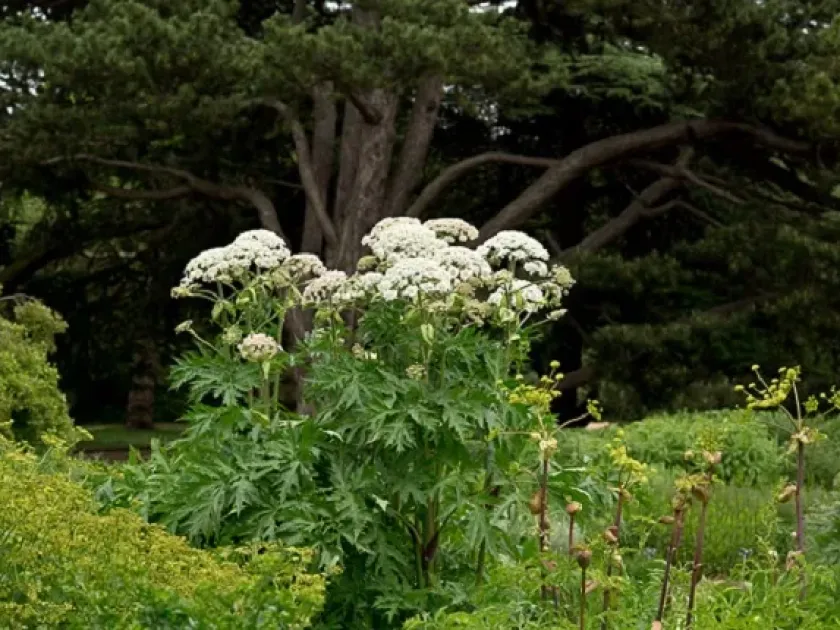
Description
Sowing dates
Sowing of Lehmann's Cow Parsnip is most often carried out in late autumn, as the seeds require a prolonged period of stratification in natural conditions for uniform germination in spring.
Early spring sowing is also possible, but in this case, the seed material requires preliminary preparation that simulates the cold wintering process in refrigeration chambers.
The sowing depth typically ranges from 2 to 4 centimeters, depending on the mechanical composition and moisture content of the soil in the specific field.
The optimal planting pattern involves a row spacing of approximately 60–70 centimeters to ensure easy machinery access for subsequent crop maintenance.
The seeding rate is calculated based on the high germination percentage of freshly harvested material, usually around 10–12 kilograms per hectare of sown area.
Growing requirements
Lehmann's Cow Parsnip belongs to the Apiaceae family and is a robust herbaceous perennial that is well-adapted to the conditions of mountainous and sub-mountainous regions.
The crop has moderate heat requirements, successfully developing in cool climate conditions, but it is sensitive to severe drought during periods of active growth.
For optimal development, the plants prefer deep, fertile loamy soils with a neutral or slightly acidic reaction, rich in organic matter.
The plant has a high demand for soil moisture, making its cultivation most effective in river floodplains or under conditions of regular irrigation during dry periods.
High photosynthetic intensity allows the crop to form significant biomass even when located in areas with partial shading.
Yield
The economic use of Lehmann's Cow Parsnip is focused primarily on the production of high-nutrient green fodder, which is characterized by good palatability for farm animals.
When all agronomic standards are met, the crop is capable of providing multiple cuts within a single growing season, ensuring stable yields of green mass.
Average productivity indicators under favorable conditions can reach from 400 to 600 centners of green mass per hectare of crops per year.
The nutritional value of the plant is due to its high protein and vitamin content, making it a promising component for the preparation of silage and haylage.
During the growing season, it is important to monitor the developmental stage, as the quality of nutrient units in the stems noticeably decreases upon entering the flowering stage.
Main diseases and pests
The primary threat to crops comes from fungal diseases, such as powdery mildew and various types of leaf spot, which actively develop under conditions of excessive humidity.
The root system of the plant may be susceptible to rot in cases of waterlogging in the soil horizon, leading to the premature death of productive shoots.
Among pests, the greatest damage is caused by the larvae of coleoptera and sucking insects, which damage the root zone and young leaves of the crop early in the season.
To control weeds in cow parsnip fields, inter-row cultivation is applied, as the crop grows relatively slowly during the early stages of development.
Disease prevention consists of adhering to crop rotation and avoiding overly dense plantings, which prevents the creation of a favorable microclimate for pathogens.
Harvesting
Harvesting for green mass is recommended to begin before the start of the mass budding phase, when the concentration of beneficial substances in the above-ground part is at its peak.
The use of specialized forage harvesting machinery allows for the mechanization of the cutting and chopping process of stems for subsequent ensiling.
If seed production is required, harvesting is carried out selectively when the central inflorescences turn brown and the seeds reach wax ripeness.
It is important to remember that caution should be exercised when handling the plant, as the sap of many species in the family can cause skin irritation upon exposure to sunlight.
After cutting, rapid transport of the mass to the processing site is required to avoid self-heating and the loss of nutritional properties of the feed.