
Ligusticum sinense
Ligusticum sinense Oliv.
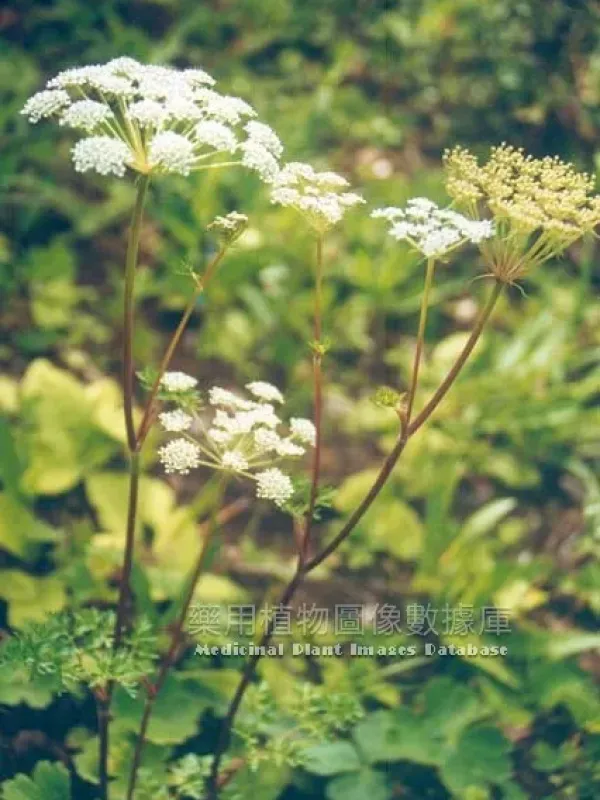
Description
Sowing dates
Ligusticum sinense Oliv. is a perennial medicinal plant belonging to the Apiaceae family. It is widely cultivated for its rhizomes, which are highly valued in traditional herbal medicine for their therapeutic properties.
Sowing is typically performed in early spring as soon as soil conditions allow. The seeds are small and require careful handling to ensure consistent germination rates in the field.
To optimize germination, pre-sowing treatments such as cold stratification or soaking in growth promoters are recommended. These steps help break dormancy and prepare the seeds for rapid development.
Seeds should be sown at a shallow depth of 1–1.5 cm. Deep planting can significantly reduce emergence rates, as the seeds have limited energy reserves to push through thicker soil layers.
The spacing between plants is crucial for healthy root development. A density of approximately 20–25 cm within rows and 30–40 cm between rows is ideal for maintaining proper airflow and space.
Growing requirements
Ligusticum sinense thrives in fertile, well-draining soils rich in organic matter. Loamy or sandy-loam textures provide the best environment for the expansive growth of the rhizome system.
The plant prefers sunny locations but requires protection from extreme heat during peak summer days to prevent foliage scorch. Proper site selection is vital for successful cultivation.
Consistent moisture is required throughout the growing season. Irrigation management is particularly critical during the root expansion phase to ensure maximum yield and high quality of the raw material.
Fertilization should prioritize phosphorus and potassium to boost root vigor. Nitrogen levels should be monitored closely, as excessive nitrogen can promote lush leaf growth at the expense of root storage.
The crop is relatively hardy, but in regions with harsh winters, mulching helps protect the rootstocks from extreme temperature fluctuations and soil frost heave.
Yield
The yield of Ligusticum sinense is measured primarily by the weight of dried rhizomes. Proper agricultural practices can result in high-quality yields suitable for the pharmaceutical market.
Average dry rhizome yields range from 1.5 to 3 tonnes per hectare under optimal conditions. Variations in yield are often attributed to soil fertility, planting density, and seasonal rainfall patterns.
Yield management involves regular weeding and inter-row cultivation to minimize resource competition. Preventing weed infestation is essential during the early stages of plant establishment.
Advanced agricultural techniques, such as drip irrigation, allow for precise control over water and nutrient delivery, leading to significantly more uniform and predictable harvest weights.
The final yield is not just about mass but also about the concentration of essential oils and active phytochemicals. Careful harvesting and drying are required to maintain the economic value of the crop.
Main diseases and pests
The crop is susceptible to common diseases of the Apiaceae family, including powdery mildew and root rot. High humidity and poor drainage are the primary drivers of fungal disease outbreaks.
Aphids and spider mites are frequent pests that attack the foliage. Their feeding activity can stunt growth and weaken the plant, ultimately negatively impacting the overall root development.
A rigorous crop rotation schedule is the most effective way to prevent soil-borne pathogens. Planting in the same location year after year is strongly discouraged to avoid disease buildup.
Integrated pest management, including the use of biological control agents and resistant cultivars, should be prioritized over chemical treatments to keep the raw material free of synthetic residues.
Regular monitoring of the fields for early signs of infection or infestation is necessary. Rapid identification allows for targeted interventions, minimizing the spread of pests and diseases across the plantation.
Harvesting
Harvesting takes place at the end of the second year of growth. By this time, the aerial parts begin to wither, indicating that nutrients have been sequestered into the roots for storage.
The rhizomes are excavated from the soil with specialized equipment to prevent mechanical damage. Intact rhizomes are much easier to clean and process compared to those with broken skins.
Post-harvest cleaning involves removing soil and impurities using water. It is important to complete this stage quickly to prevent moisture-induced spoilage or decay of the root material.
Drying is a critical step that must be controlled carefully. Using industrial dryers at moderate temperatures prevents the degradation of volatile essential oils, which define the product's medicinal quality.
Storage should be conducted in climate-controlled facilities that are cool, dry, and well-ventilated. Proper packaging is essential to protect the dried rhizomes from moisture, light, and pests.