
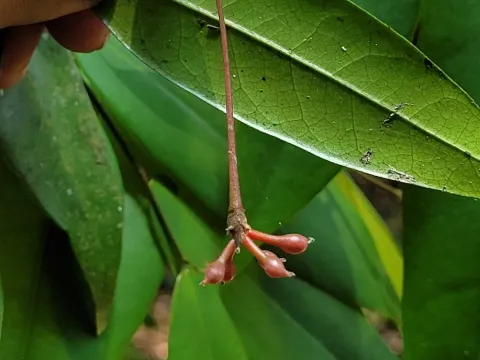
Miliusa
Miliusa
Propagation of Miliusa in nursery conditions is primarily carried out through seeds, as cutting propagation often shows low efficiency. Seeds require preliminary stratification and are sown in loose, well-drained substrate immediately after fruit ripening.
What the section contains
 Miliusa brahei
Miliusa brahei
Miliusa brahei
 Miliusa dioeca
Miliusa dioeca
Miliusa dioeca
 Miliusa horsfieldii
Miliusa horsfieldii
Miliusa horsfieldii
 Miliusa indica
Miliusa macrocarpa
Miliusa macrocarpa
Miliusa nilagirica
Miliusa nilagirica
Miliusa indica
Miliusa indica
Miliusa macrocarpa
Miliusa macrocarpa
Miliusa nilagirica
Miliusa nilagirica
 Miliusa sclerocarpa
Miliusa sclerocarpa
Miliusa sclerocarpa
 Miliusa tomentosa
Miliusa tomentosa
Miliusa tomentosa
 Miliusa velutina
Miliusa velutina
Miliusa velutina
Miliusa
The optimal time for sowing in greenhouse conditions is the beginning of the spring period when daylight hours increase. Using soil heating helps accelerate seed germination, which can remain dormant for several months.
The sowing depth for seeds is no more than 1–2 centimeters, after which containers are covered with film to maintain a high level of humidity. It is important to ensure a stable temperature range of 25–28 degrees Celsius for successful seedling emergence.
After the appearance of two pairs of true leaves, seedlings are pricked into individual containers. Young plants require gradual acclimatization to direct sunlight and regular fertilization with complex mineral fertilizers.
In its natural habitat, Miliusa reproduces through self-seeding, with young specimens often developing in the shade of the mother plant, gradually adapting to the conditions of the lower tropical forest layer.
Miliusa belongs to the Annonaceae family and is a genus of evergreen trees or shrubs. It prefers a tropical climate with high air humidity and the absence of sharp temperature fluctuations throughout the year.
The culture is quite demanding regarding soil conditions: it grows best in deep, fertile loams with a neutral or slightly acidic reaction. The soil must have excellent water permeability, as stagnant moisture around the roots is detrimental to the plant.
Lighting is a critical factor: young trees need light shading, while adult specimens can withstand direct sunlight. Under cultivation conditions, it is important to protect plantings from strong winds.
Humidity requirements include regular watering, although watering is reduced during the winter period when growth activity slows. The plant does not tolerate dry air well, so using misting systems in enclosed orangeries is recommended.
The temperature optimum for vegetation is 22–30 degrees Celsius. Even a short-term drop in temperature to values close to freezing can cause damage to the foliage and stop growth processes.
The economic use of Miliusa is limited, as it is not a major industrial agricultural crop in the traditional sense. The primary interest lies in its timber, which is valued in local construction for its strength and elasticity.
The fruits of some Miliusa species are edible and traditionally used for food by the local population, although commercial production is extremely underdeveloped. Fruit yield per adult tree varies significantly depending on growing conditions.
Research into essential oils extracted from the leaves and flowers of Miliusa is ongoing in the pharmaceutical industry. Harvesting plant raw materials for these purposes is carried out during the active flowering period, which limits annual biomass yields.
The ornamental potential of the genus makes it promising for landscape design in tropical regions. In this case, the output is considered to be high-quality seedlings ready for transplanting into open ground to form park zones.
Despite its biological potential, systemic data on fruit or biomass yields per hectare are practically absent in modern agronomic literature.
The main threats to Miliusa are fungal diseases of the root system that arise when drainage is poorly managed. The development of pathogens leads to rapid wilting of the plant and rotting of the base of the trunk.
Among pests, the greatest danger is posed by sap-sucking insects such as scale insects and spider mites, which actively colonize leaf blades in low-humidity conditions. They suck out cell sap, causing chlorosis and deformation of the shoots.
In tropical conditions, plantings can be affected by various types of powdery mildew, especially during prolonged rainy seasons. To control the spread of infection, fungicidal treatments with copper-based preparations are used.
Leaf-eating insects, including larvae of certain Lepidoptera, can cause significant damage to vegetative mass at a young age. Monitoring pest populations must be conducted throughout the entire growing season.
To prevent the spread of diseases, it is important to follow sanitary rules: remove dead branches in a timely manner, ensure optimal planting density, and keep tools clean during pruning.