
Miliusa dioeca
Miliusa dioeca
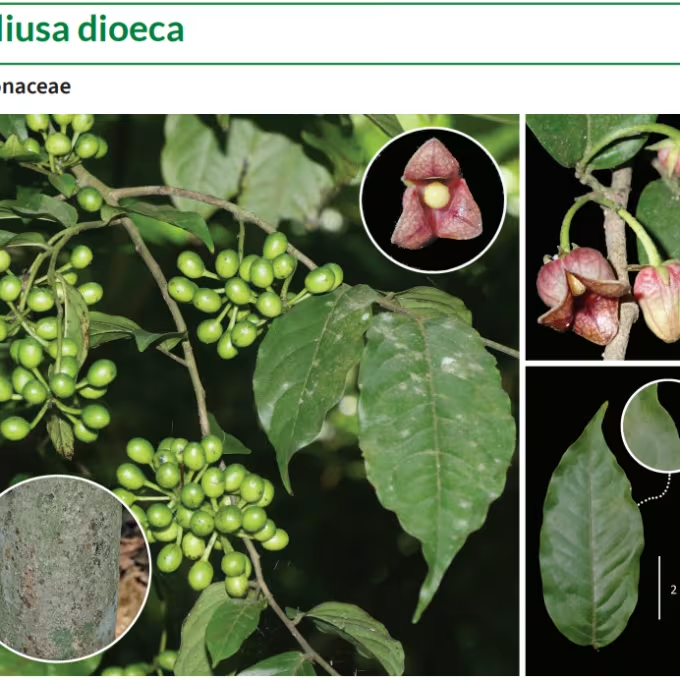
Description
Growing requirements
Miliusa dioeca is a botanical species belonging to the Annonaceae family, known for its distinctive ecological niche in tropical and subtropical regions. Originating from parts of Southeast Asia, this plant thrives in warm, humid climates where seasonal fluctuations are minimal.
The plant requires deep, fertile, and well-drained soil to support its extensive root system. Soils enriched with organic mulch are ideal, as they replicate the natural forest floor conditions where this species typically matures under canopy protection.
Agricultural management for Miliusa dioeca involves providing consistent irrigation during dry spells. However, moisture control is paramount, as waterlogged soil significantly increases the risk of root rot and other pathogenic infections.
Climatic requirements are strict: the plant is highly sensitive to cold and requires a frost-free environment to maintain steady physiological functions. An ambient temperature range of 20 to 30 degrees Celsius is optimal for leaf development and reproductive health.
Strategic placement in the field or nursery should account for its need for dappled sunlight. While mature plants might tolerate higher light levels, young seedlings benefit significantly from partial shade, which prevents chlorophyll degradation and heat stress.
Harvesting
Harvesting Miliusa dioeca is a precise operation focused on identifying the peak of maturity for the fruits. Gardeners monitor skin texture and color intensity to ensure the fruit is harvested when flavor profiles and nutritional content are fully developed.
Manual harvesting is the standard procedure to protect the delicate outer layers of the fruit. Using shears or careful hand-picking helps maintain the integrity of the produce, which is essential for both commercial quality and long-term storage.
Post-harvest logistics involve immediate sorting and cleaning to remove any debris. Given the tropical nature of the crop, fruits are sensitive to rapid oxidation; thus, quick cooling or processing into dried forms is frequently recommended.
Some growers focus on the sustainable harvest of leaves and stems for specific botanical extracts. Such practices must follow strict pruning guidelines to ensure that the mother plant remains healthy and continues to produce in subsequent growing seasons.
Packaging for market should be well-ventilated, ensuring adequate airflow around the fruits. This prevents moisture buildup, which can otherwise lead to rapid microbial degradation during the storage period.