
Miliusa horsfieldii
Miliusa horsfieldii
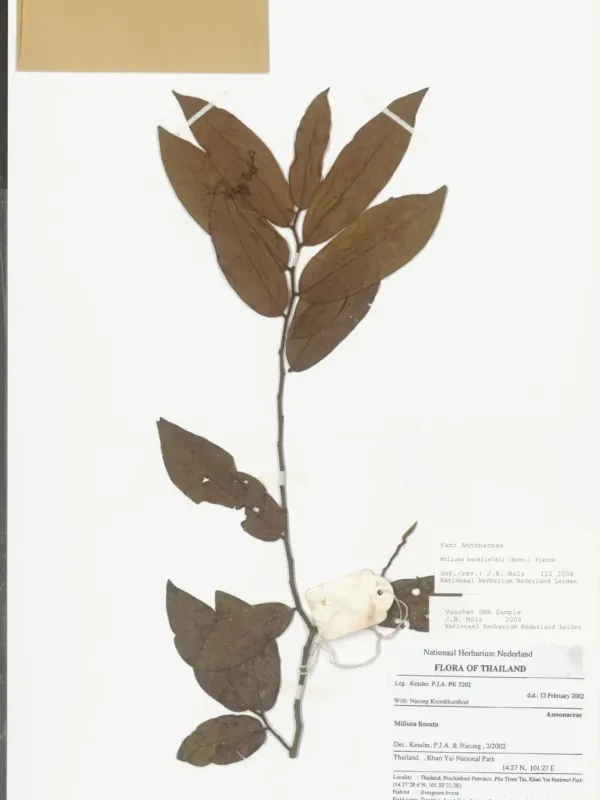
Description
Growing requirements
Miliusa horsfieldii is a distinguished woody species belonging to the Annonaceae family. Native to the tropical regions of Southeast Asia, this tree is well-adapted to the dense canopy environments of rainforests where moisture is abundant.
The cultivation requirements for this species are specific to tropical climates, necessitating consistent warmth throughout the year. Soil health is paramount, as the tree thrives best in deep, fertile, and well-drained soil substrates that prevent root rot during heavy rainfall.
From a botanical perspective, the plant exhibits a robust structure with high-quality wood density. Its leaves are simple and alternate, arranged to optimize photosynthesis in filtered light conditions, which is a key adaptive trait for the species within its natural habitat.
Agricultural management requires careful attention to site selection and protection from strong winds that can damage the developing canopy of younger specimens. Consistent monitoring of soil fertility ensures that the growth rate remains optimal for commercial timber objectives.
The economic value of this crop is primarily found in its high-quality timber, which is utilized in local craftsmanship and construction projects. Beyond its utilitarian role, the plant contributes significantly to the maintenance of ecological balance in reforestation initiatives.
Main diseases and pests
The primary threats to Miliusa horsfieldii involve fungal pathogens that affect foliage and stems in high-humidity environments. Maintaining proper spacing between trees helps reduce the risk of large-scale disease transmission within a plantation.
Pests, particularly wood-boring insects, represent a substantial risk to the vitality of mature trees. Regular scouting and adherence to integrated pest management practices are essential to protect the long-term health of the stand.