
Miliusa velutina
Miliusa velutina
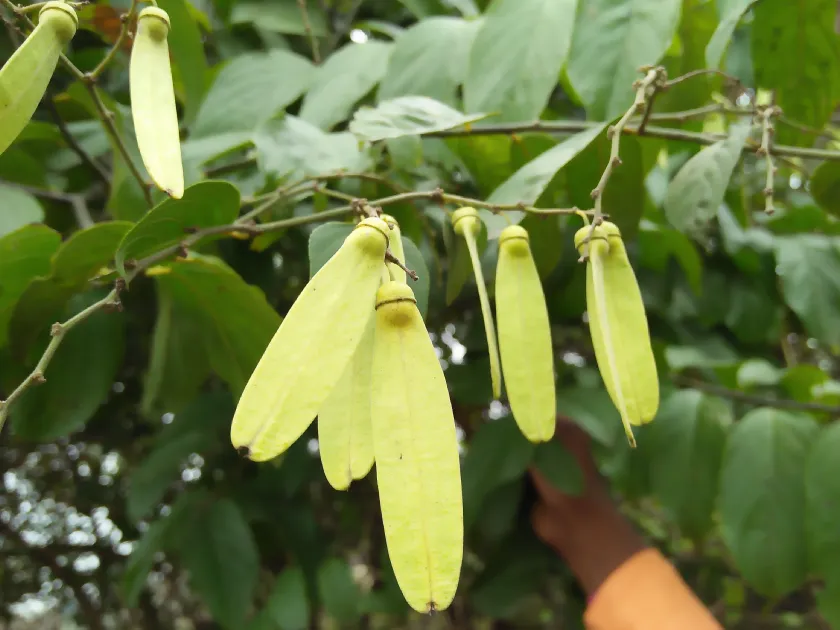
Description
Sowing dates
Propagation of Miliusa velutina in its natural habitat occurs primarily through seeds. The seeds exhibit moderate germination rates and require pre-sowing treatments, such as soaking in warm water, to improve the success of seedling emergence.
In nursery settings, seeds should be sown in a well-draining substrate composed of sand, compost, and garden soil. The ideal planting time coincides with the beginning of the monsoon season, when humidity levels are naturally high.
Seeds are typically sown at a depth of 1 to 2 centimeters to ensure adequate oxygen exposure during the initial growth phase. After sowing, the soil surface should be mulched to retain moisture and prevent overheating from intense tropical sun.
Seedlings usually emerge within 3 to 5 weeks depending on the freshness of the seed stock. During the first year of life, young plants require shade to protect them from excessive light and heat stress common in tropical environments.
Transplanting to permanent sites is best performed at the onset of the rainy season. This timing ensures that the soil moisture levels are optimal, facilitating faster root establishment and reducing transplant shock for the young trees.
Growing requirements
Miliusa velutina is a classic tropical species that thrives in warm climates without significant temperature fluctuations. It is intolerant of frost and requires stable, high ambient temperatures to achieve optimal growth rates throughout the year.
The species prefers deep, well-draining alluvial soils with a neutral to slightly acidic pH. Excessive soil moisture or waterlogging is highly detrimental to root health, therefore proper drainage infrastructure is essential on heavy clay soils.
The tree is sensitive to light conditions, needing partial shade during its juvenile stage and bright, diffused light as it matures. Direct, intense midday sun can cause leaf scorching if the tree is not properly acclimated to the site.
High relative humidity, ideally between 70% and 80%, is crucial for the development of the foliage and overall tree health. During dry periods, supplemental irrigation is necessary to prevent premature leaf shedding and growth stagnation.
While showing moderate resilience to occasional dry spells, the species requires consistent moisture access for peak biomass production. Proper site selection and soil management are key to sustaining healthy tree stands.
Yield
The economic value of Miliusa velutina lies in its utility for both timber production and the collection of phytochemicals. The bark and fruits have long been utilized in traditional medicinal systems within its native range.
Its timber, characterized by moderate density, is utilized for creating small domestic implements and agricultural tools. Harvesting is conducted under sustainable forestry guidelines to ensure the long-term viability of the population.
Biological productivity is highly dependent on site-specific conditions. Under ideal circumstances, the tree can reach heights of 10 to 15 meters, with relatively vigorous growth observed during its first decade of life.
Bark collection for pharmacological use must be balanced to ensure the tree maintains its primary physiological functions. Regulated harvesting practices are implemented to prevent over-exploitation and forest degradation.
Fruits, while not a commercial staple, are occasionally consumed locally and contain bioactive compounds. Modern research continues to explore these compounds for potential applications in the nutraceutical and medical sectors.
Main diseases and pests
The primary threats to Miliusa velutina stands are fungal root diseases caused by waterlogged conditions. Such infections frequently target weakened trees that are already struggling with poor soil health or environmental stress.
Insect pests, including defoliators and specific scale insects, present a significant danger to tree health. Large-scale infestations can cause severe foliage loss, which drastically reduces the growth rate of young and maturing trees.
Wood-boring insects can inflict substantial structural damage on adult trees by creating galleries inside the trunk. These entry points often serve as portals for secondary fungal infections, accelerating the decay process.
To reduce the risk of large-scale disease outbreaks, it is recommended to avoid planting as a pure monoculture. Mixed-species plantations create a natural barrier that slows the spread of host-specific pathogens and pests.
Effective disease prevention relies on regular monitoring, sanitary pruning of infected branches, and maintaining overall tree vigor through proper nutrient management. Healthy trees exhibit natural resistance to common pathogens.
Harvesting
Harvesting components of Miliusa velutina requires strict adherence to seasonal schedules. Bark for medicinal purposes should be collected at the end of the rainy season when sap flow facilitates easier stripping of the material.
Timber harvesting is typically performed via selective thinning of over-mature or damaged trees. Felling should be carried out using precise hand tools to minimize collateral damage to the surrounding forest ecosystem.
Once collected, bark must be dried in shaded, well-ventilated areas to prevent degradation. Exposure to direct sunlight should be avoided as it breaks down valuable bioactive compounds and essential oils, lowering quality.
Fruits are harvested manually upon reaching maturity, which is identified by specific color changes in the skin. Post-harvest sorting is essential to remove damaged or infested material, ensuring the quality of the final batch.
Storage must occur under low humidity and stable temperature conditions. Proper protective packaging prevents moisture absorption and pest infestation, ensuring the raw material remains stable until it reaches the end user.