
Meiogyne virgata
Meiogyne virgata
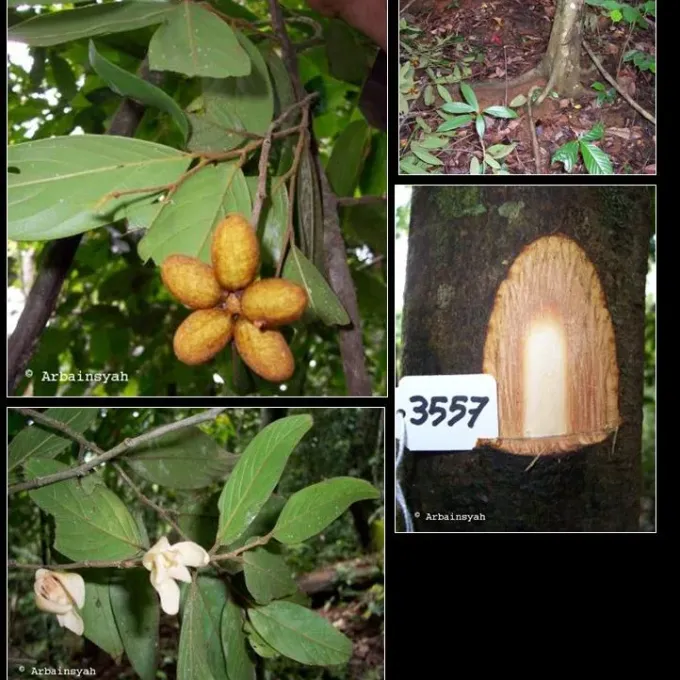
Description
Growing requirements
Meiogyne virgata is a perennial evergreen woody plant belonging to the Annonaceae family. It is naturally distributed throughout the tropical rainforests of Southeast Asia, thriving in the warm and humid climates of countries such as Malaysia, Indonesia, and the Philippines.
The plant requires high thermal stability for optimal physiological development, favoring temperatures ranging between +22°C and +30°C. It is extremely sensitive to cold stress, making it unsuitable for cultivation in regions with temperatures dropping below +15°C, as this can lead to severe metabolic stagnation.
Success in cultivating this species depends on providing rich, well-draining soil with a high organic matter content. Given its origin in tropical forest understories, the soil should maintain a slightly acidic to neutral pH, ensuring that water does not accumulate around the root system to prevent root rot.
In terms of light exposure, Meiogyne virgata exhibits significant shade tolerance during its vegetative stages. However, for mature specimens intended for production, access to filtered or dappled sunlight is essential to promote flowering and fruit development throughout the canopy.
Agricultural management must include consistent irrigation practices to mimic the high humidity levels of its native habitat. Maintaining uniform soil moisture is crucial, especially during the establishment phase, as the plant does not possess mechanisms to withstand prolonged drought conditions.
Harvesting
The economic value of this crop is largely rooted in its potential for secondary metabolites, which are of interest in the pharmacological and essential oil industries. In local agricultural contexts, it is sometimes managed as part of agroforestry systems alongside other tropical perennials.
Harvesting is typically a manual labor-intensive process, as the fruits do not always ripen uniformly. Careful monitoring of the skin color and aromatic profiles is required to ensure the harvest occurs at the ideal time for maximum quality, particularly if the crop is intended for medicinal processing.