
Artabotrys kurzii
Artabotrys kurzii
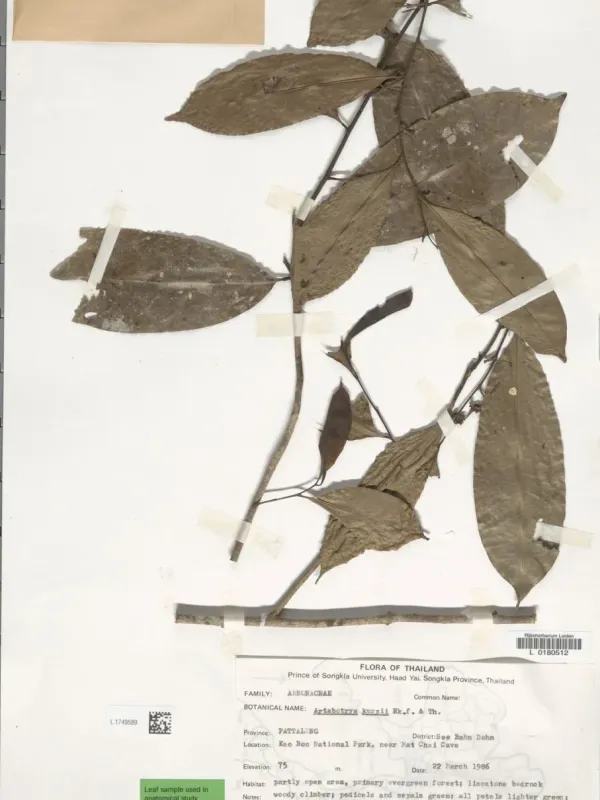
Description
Growing requirements
Artabotrys kurzii is a woody, evergreen climbing vine that belongs to the Annonaceae family. This species is native to the tropical forests of Southeast Asia, where it thrives in humid and warm environments.
The plant requires stable tropical temperatures for optimal physiological processes. The ideal thermal range for growth is between +22°C and +28°C, with strict protection from cold drafts and frost required at all times.
Soil requirements involve a loose, well-draining substrate rich in organic matter. A mixture consisting of peat, leaf mold, and sand is typically used to ensure proper aeration and moisture retention without stagnation.
High humidity levels are essential for the health of Artabotrys kurzii. Growers must maintain an ambient humidity of 70% or higher, which is often achieved through misting systems or the use of humidifiers in greenhouse settings.
Lighting should be bright but indirect to prevent leaf scorch. While the plant appreciates natural light, direct sun exposure during midday can be harmful to its foliage, necessitating the use of light-filtering shades.
Harvesting
The primary utility of this culture lies in its ornamental value and its application in the fragrance industry. The flowers are highly prized for their unique, sweet, and lingering fruit-like scent.
Harvesting of the flowers for essential oil extraction occurs during the early morning hours. This timing is crucial to capture the peak concentration of volatile organic compounds produced by the blossoms.
In ornamental horticulture, the plant is trained on vertical structures or trellises to manage its vigorous growth. Pruning is necessary to prevent the plant from becoming entangled and to maintain an aesthetic shape.
Maintenance includes regular fertilization during the active growing season. A balanced, water-soluble fertilizer applied every two weeks ensures steady development and promotes more prolific flowering.
Propagation can be achieved through both stem cuttings and seeds. Cuttings taken from semi-hardwood are preferred as they allow for faster maturation and ensure the resulting plant clones the desirable traits of the parent.