
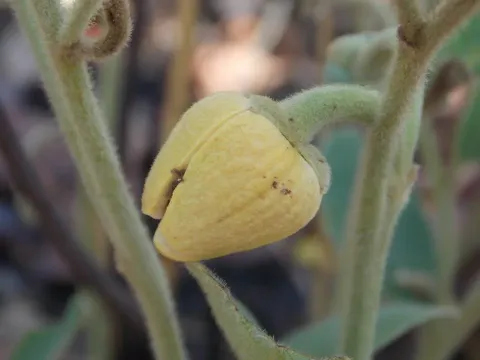
Narrow-leaved custard apple
Annona stenophylla
Annona stenophylla, commonly known as the narrow-leaved custard apple, is a distinct species belonging to the Annonaceae family. Native to the grasslands and savannahs of Southern Africa, this plant has adapted to environmental challenges such as fire and nutrient-poor soils through the development of a large, woody underground tuber.
What the section contains
Narrow-leaved custard apple
The botanical structure of the plant is characterized by its narrow leaf morphology and compact shrub-like habit. Unlike some of its taller relatives, this species rarely develops into a large tree, making it unique within the genus Annona. It undergoes a dormant period linked to the seasonal water cycle of its native habitat.
To cultivate this species successfully, growers must ensure a soil environment that mimics its natural habitat: highly porous, sandy, and well-drained. Drainage is the single most important factor, as the roots are highly susceptible to rot if subjected to waterlogged conditions, even for short durations.
Climate requirements include plenty of exposure to direct sunlight and protection from sub-zero temperatures. While it thrives in warm tropical conditions, it is important to observe its natural dormancy cycle; during the dry season, watering should be significantly reduced or ceased entirely to allow the plant to rest.
The primary agricultural interest in Annona stenophylla lies in its edible fruits. These fruits are highly valued in local communities for their sweet, aromatic flesh. They provide a source of essential nutrients and are increasingly becoming a subject of interest for small-scale experimental fruit production in arid, warm climates.
Root rot is the most common physiological threat to this plant, often triggered by over-irrigation or soil compaction. Preventing these conditions involves planting on elevated beds or slopes and using a coarse substrate that facilitates immediate water runoff.
Pest threats include scale insects and mealybugs, which tend to congregate in the leaf axils. Effective management involves regular monitoring and the use of horticultural oils, which are generally safer for fruit-bearing trees than systemic chemical pesticides.