
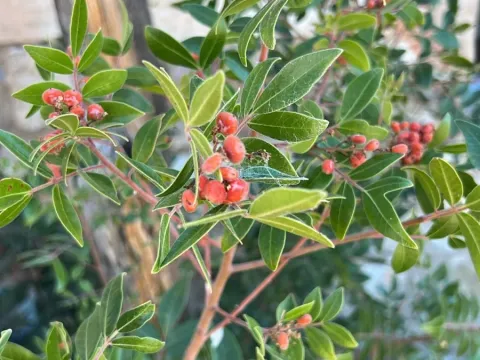
Evergreen sumac
Rhus virens
Evergreen sumac (Rhus virens) belongs to the Anacardiaceae family. This shrub is native to the rocky, arid habitats of the southwestern United States and northern Mexico, where it thrives in challenging, well-drained environments.
What the section contains
Evergreen sumac
The plant performs best in neutral to slightly alkaline, rocky soils that prevent water retention. High-quality drainage is the most critical factor for successful growth, as the root system is highly sensitive to hypoxia caused by waterlogged soil.
As a drought-tolerant species, Rhus virens is an excellent choice for xeriscaping. It does not require frequent irrigation once it is established, as its deep roots extract moisture efficiently from the lower soil horizons.
Exposure to full sunlight is essential for maintaining a dense, healthy growth habit and the evergreen foliage characteristic of this species. Inadequate light levels will cause the shrub to become straggly and weak.
Climatically, the plant is suited for regions with mild winters. While it can tolerate heat exceptionally well, frost protection for young specimens is recommended to ensure they successfully survive their first few winter seasons.
Root rot is the most common threat to evergreen sumac, usually induced by poor drainage or over-irrigation. Ensuring the soil is porous and avoiding mulch accumulation near the stem base is vital for plant longevity.
Pests such as aphids and scale insects may occasionally infest the stems and leaves. Regular monitoring during the spring growth flush allows for early intervention, often manageable with manual removal or horticultural soaps.
Fungal leaf spots can occur if humidity levels remain consistently high for extended periods without adequate air movement. Pruning to open the center of the canopy helps significantly in reducing the risk of fungal outbreaks.
Excessive fertilizer application can stress the plant and encourage succulent growth that is more susceptible to insect attack. It is best to provide minimal fertilization, focusing on balanced, slow-release nutrients if soil quality is poor.
Regular sanitation, which involves removing dead or diseased wood, is a fundamental agricultural practice for Rhus virens. Keeping the shrub free of debris helps prevent the accumulation of pathogens that can lead to wood decay.