
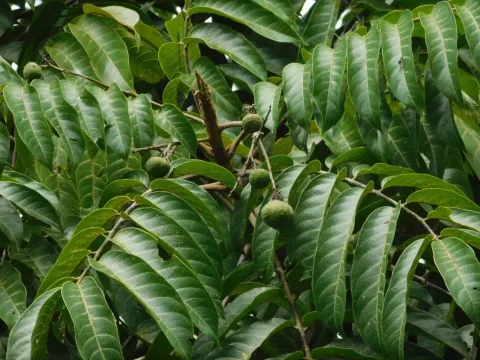
Dracontomelon
Dracontomelon
Dracontomelon is a genus of large, evergreen or deciduous trees belonging to the Anacardiaceae family, closely related to mango and cashew. These trees often feature massive trunks and widespreading canopies, reaching significant heights in their native tropical habitats.
What the section contains

Dracontomelon
The crop thrives in hot, humid tropical climates characterized by high annual precipitation and minimal temperature fluctuation. Dracontomelon is extremely sensitive to frost and cold winds, which dictates its cultivation range within tropical zones near the equator.
Well-drained, deep, and nutrient-rich soils are essential for the healthy growth of these trees. While they appreciate moisture, they strictly require a non-waterlogged environment to prevent root decay, which is a major limiting factor in commercial plantation site selection.
Light intensity plays a crucial role in the development of the tree canopy and the subsequent fruit-bearing capacity. While seedlings benefit from partial shade, mature trees require full sunlight to optimize photosynthesis and maintain consistent annual productivity.
Agrotechnical practices involve mulching the base to preserve soil moisture and reduce weed competition. Controlled organic fertilization is often applied to sustain vegetative growth, ensuring the tree develops a strong structure capable of supporting heavy fruit yields.
Dracontomelon trees are primarily valued for their edible fruit, which possesses a unique flavor profile often described as a hybrid of plum and pineapple. The fruit is popular in local culinary traditions for making refreshing drinks, spicy sauces, and various preserves.
Beyond the fruit, the wood of the Dracontomelon is highly sought after for its durability and intricate grain pattern. It is extensively used in the furniture industry and for architectural woodcraft in regions where the tree is grown as a plantation crop.
A mature, well-maintained tree can produce a substantial yield, often numbering hundreds of kilograms per season. Productivity is highly dependent on cross-pollination levels and the environmental conditions during the flowering phase of the tree.
The harvesting process is labor-intensive and requires careful handling, as the fruits are prone to bruising if dropped. Due to their perishable nature, harvesting is usually carried out in multiple passes to ensure that only fully mature fruits are gathered.
Post-harvest logistics are a challenge due to the rapid ripening of the fruit. Consequently, production is largely localized to regions with established processing facilities that can transform fresh fruit into value-added products like jams or dried slices.
The primary threats to Dracontomelon orchards include wood-boring insects and fruit-feeding pests that target the reproductive organs. Infestations can lead to significant yield losses if not detected and addressed during the early stages of the growing season.
Fungal diseases, particularly those affecting the root system and bark, are common in regions with excessive rainfall or poor soil drainage. These pathogens can cause long-term decline in tree health and increase susceptibility to secondary environmental stressors.
Leaf spots caused by fungal pathogens can affect foliage quality, reducing the tree's overall vigor. Implementing good horticultural practices, such as proper spacing between trees to encourage airflow, significantly lowers the incidence of foliage-related diseases.
In terms of management, integrated pest management (IPM) strategies are favored to balance the need for crop protection with environmental safety. This includes the preservation of natural predators and the judicious use of pesticides where absolutely necessary.
Regular sanitation measures, including the removal of infected branches and debris from the orchard floor, are critical for maintaining hygiene. By reducing the inoculum load of diseases, growers can effectively protect their trees throughout the productive lifespan.