
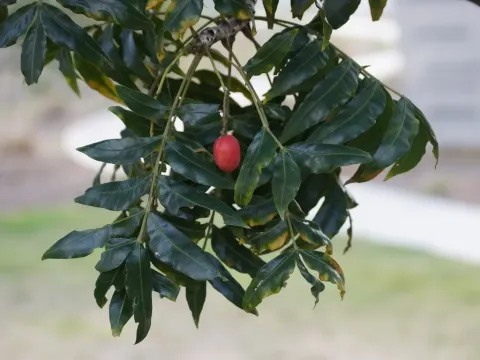
Harpephyllum
Harpephyllum
Harpephyllum, commonly known as the Kaffir plum, belongs to the Anacardiaceae family. It is a robust evergreen tree that is highly valued for both its ornamental appearance and its edible, bright red fruits produced in abundance throughout the harvest season.
What the section contains

Harpephyllum
Native to Southern Africa, this species thrives in diverse habitats, ranging from coastal forests to wooded grasslands. It is an exceptionally adaptable tree capable of growing in various soil types, provided that the drainage remains efficient throughout the year.
The plant requires full sun exposure to maintain its dense foliage and maximize fruit production. While it possesses a degree of drought tolerance once established, young trees must be watered regularly to ensure proper root development and structural growth.
Climate requirements include temperate to tropical conditions, as the tree is sensitive to heavy frost. In commercial cultivation, it is essential to protect young plants from cold snaps and wind exposure to prevent branch damage and ensure a consistent yield of fruit.
Agrotechnical management involves regular soil fertilization with organic matter to support the rapid growth rate of the tree. Mulching around the base is recommended to regulate soil moisture levels and suppress weed competition during the early stages of establishment.
Harvesting usually takes place in late summer or autumn when the fruits turn a deep red color. The fruits are typically hand-picked to avoid damage to the skin and are often processed into jams or fermented beverages due to their tart and distinct flavor profile.
The timber of the Harpephyllum tree is also considered a valuable secondary product in sustainable forestry. It is known for being dense, attractive, and durable, making it suitable for high-quality furniture making and interior woodwork projects.
While generally hardy, the tree can be susceptible to scale insects and mites if moisture levels are poorly managed. Maintaining a clean cultivation environment and ensuring good air circulation within the canopy are the most effective preventive measures against pests.