
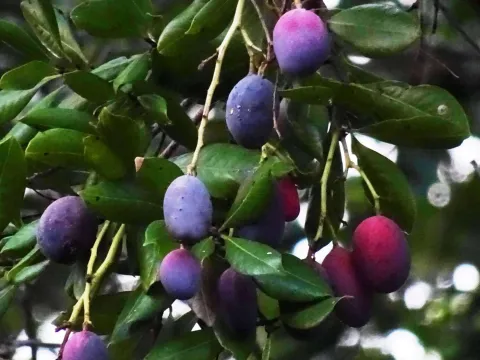
Mangifera griffithii
Mangifera griffithii
Mangifera griffithii is a tropical tree species belonging to the family Anacardiaceae. It is a wild relative of the common mango, native to the lush tropical rainforests of Southeast Asia, including parts of Malaysia, Indonesia, and the Malay Peninsula. It thrives best in undisturbed primary forest environments.
What the section contains
Mangifera griffithii
The climate requirements for this species are strictly tropical. It demands consistently high temperatures throughout the year and high humidity levels. Unlike some other fruit trees, it does not tolerate cold snaps or arid conditions, necessitating a habitat that mirrors the moisture-dense environment of a tropical basin.
Regarding soil conditions, Mangifera griffithii prefers deep, fertile, and well-drained soils. However, given its natural habitat in flood-prone areas, it shows a degree of tolerance for periodic waterlogging. Organic matter content is crucial for the healthy development of the tree and its fruit yield.
Botanically, the tree exhibits a dense canopy with leathery, narrow leaves that are designed to shed water efficiently. Its growth habit is typically erect, reaching significant heights in the wild. The inflorescences produce small, fragrant flowers which, upon pollination, develop into small, distinctively flavored fruits.
In terms of agricultural and хозяйственное usage, the fruit is harvested by local communities for traditional food preparations. The wood of the tree is also considered useful in local carpentry, although the species is primarily valued for its ecological role and genetic potential within the mango genus.
The primary threats to Mangifera griffithii are habitat loss due to deforestation and land conversion. As a species dependent on specific forest conditions, the fragmentation of its natural range poses a significant risk to its long-term survival and population density.
Agricultural pests and diseases common to the Mangifera genus affect this species as well. These include fruit flies that impact yield and various fungal pathogens like Colletotrichum gloeosporioides (anthracnose), which causes spots on leaves and rot on the maturing fruit.