
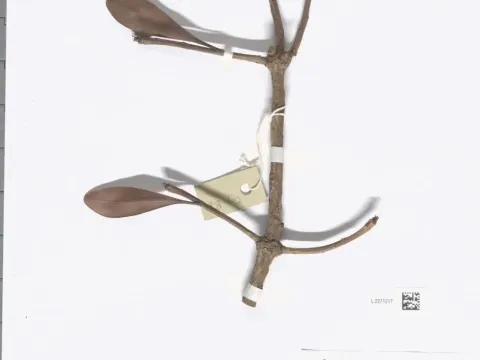
Mangifera caesia
Mangifera caesia
Mangifera caesia, commonly referred to as bambangan, is a tropical fruit tree belonging to the Anacardiaceae family. It is a distinctive species within the Mangifera genus, highly prized in its native regions for its unique flavor profile and nutritional value.
What the section contains
Mangifera caesia
The plant originates from the tropical rainforests of Borneo and Sumatra. It thrives in high-humidity environments and is well-adapted to the equatorial climate, which provides the consistent warmth and moisture required for its vigorous development.
The crop requires deep, fertile, and well-drained soils to prosper. It is particularly sensitive to waterlogging, so site selection should prioritize elevated areas or slopes where natural drainage is effective, even in areas with heavy rainfall.
Temperature requirements are stringent, with an optimal range between +25°C and +30°C. The species lacks cold tolerance and is strictly limited to tropical latitudes, making it unsuitable for cultivation in cooler or subtropical environments.
Agronomic management involves periodic canopy thinning to ensure proper aeration and sunlight penetration. Sustainable nutrient management, utilizing organic compost and trace minerals, is essential to support the tree’s long-term health and fruit-bearing potential.
Mangifera caesia is primarily utilized for its culinary potential. Its fiber-rich flesh is processed into various food products, including jams, local seasonings, and traditional ferments. The fruit is a significant source of local food security in its native areas.
Crop yields vary significantly based on seedling selection and orchard maintenance. Mature trees can produce large harvests, but irregular bearing cycles are common, which requires professional management and selective breeding to stabilize annual production levels.
Disease management is a critical aspect of cultivation. The crop is susceptible to various fungal pathogens, such as Colletotrichum species, which can cause anthracnose, leading to fruit rot and defoliation if not controlled through sanitation and fungicide application.
Pest management focuses on fruit-boring insects and fruit flies. Integrated pest management (IPM) practices, including the use of fruit bagging and biological control agents, are the most effective methods to minimize crop losses without excessive pesticide use.
Harvesting Mangifera caesia is a labor-intensive process due to the height of the trees and the perishable nature of the fruit. Growers must pick the fruit at the peak of maturity, ensuring careful handling to prevent bruising that accelerates spoilage.