
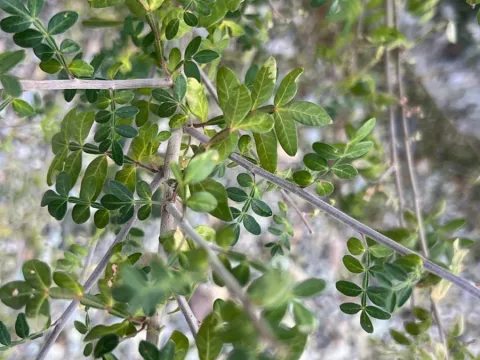
Littleleaf sumac
Rhus microphylla
Littleleaf sumac (Rhus microphylla) is a hardy deciduous shrub belonging to the Anacardiaceae family. Native to the arid regions of North America, it has evolved to thrive in harsh, semi-desert environments with minimal water resources.
What the section contains
Littleleaf sumac
The species is exceptionally drought-tolerant and well-adapted to rocky, sandy, or alkaline soils where many other crops would fail. It requires excellent soil drainage, as waterlogged conditions are detrimental to its root system.
Full sun exposure is a critical requirement for this culture to develop a robust structure and produce viable fruit. It performs best in open areas where there is no competition for light or air circulation.
Agronomically, littleleaf sumac is highly valued for its low maintenance needs. Once established, the plants are self-sufficient and capable of surviving extreme temperature fluctuations, ranging from intense desert heat to freezing winter conditions.
Spacing is an important consideration during planting to ensure uniform growth across the plantation. Providing adequate distance between rows prevents the overcrowding that can lead to disease outbreaks in later years of development.
The primary yield from littleleaf sumac consists of its drupes, which are harvested for their acidic properties. These fruits are commonly processed into spices or beverages, highly prized for their unique tart flavor profile.
Beyond the edible fruit, the plant serves as a vital source of tannins. The bark and foliage contain high concentrations of these compounds, which are essential for traditional tanning and natural dye production.
The economic value of this crop is further enhanced by its role as a pollinator-friendly plant. By attracting bees and other beneficial insects, it supports the local biodiversity of the surrounding agricultural landscape.
Sustainable harvesting techniques ensure the longevity of the shrubs. Farmers typically employ manual harvesting methods for the clusters of fruit, ensuring that only fully mature drupes are collected for processing.
Post-harvest handling focuses on drying the fruit promptly to prevent mold development. When stored in a cool, dry environment, the harvest remains stable for extended periods, preserving its quality for market distribution.
Littleleaf sumac is naturally resilient to many common agricultural diseases, provided it is grown in suitable soil conditions. Root rot is the most common issue, usually triggered by poor drainage or excessive irrigation.
Pest pressure is relatively low compared to other fruit crops. Aphids may occasionally infest young, succulent foliage during the spring flush, but these populations are typically managed by natural predators.
Powdery mildew can occasionally appear if humidity levels remain high for prolonged periods. Maintaining proper air circulation through regular pruning of the inner canopy is the most effective cultural control method.
Preventative management is key, focusing on selecting sites that minimize moisture accumulation. Removing dead or damaged branches during the winter dormant season keeps the shrub in a healthy state and reduces nesting sites for pests.
The need for chemical pesticides is minimal, making littleleaf sumac an excellent candidate for organic or low-input farming systems. Monitoring and early detection are usually sufficient to maintain healthy crop performance.