
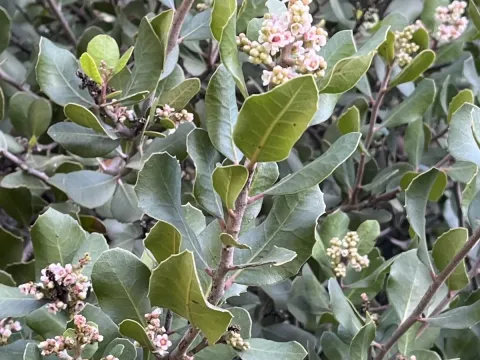
Lemonade sumac
Rhus integrifolia
Lemonade sumac (Rhus integrifolia) is an evergreen shrub in the Anacardiaceae family, native to the coastal regions of Southern California and Baja California.
What the section contains
Lemonade sumac
This species is highly valued for its exceptional drought tolerance and ability to thrive in poor, well-drained, rocky soils, making it ideal for xeriscaping.
Botanically, it is characterized by leathery, dark green leaves with entire (smooth) margins and small clusters of white to pinkish flowers that develop into edible, fuzzy drupes.
Cultivation requirements are minimal: the plant prefers full sun and requires irrigation only during its establishment phase; once mature, it is remarkably self-sufficient.
Economically and ecologically, it serves as a robust tool for slope stabilization, erosion control, and wildlife habitat restoration, alongside its historical culinary use for making acidic beverages.
Root rot is the primary disease risk for lemonade sumac, typically triggered by waterlogged soils or improper irrigation management during warm periods.
Common insect pests include scale insects and various sap-sucking bugs that can settle on younger branches, potentially reducing the overall health of the plant.
Disease management primarily involves maintaining optimal soil aeration and preventing excessive moisture buildup around the root collar.
Cultural practices such as pruning dead or damaged growth help minimize the spread of fungal spores and improve air circulation within the canopy.
Chemical control should be avoided or applied with caution, as the plant can show phytotoxicity symptoms when exposed to certain broad-spectrum insecticides.