
Black copperburr
Sclerolaena muricata
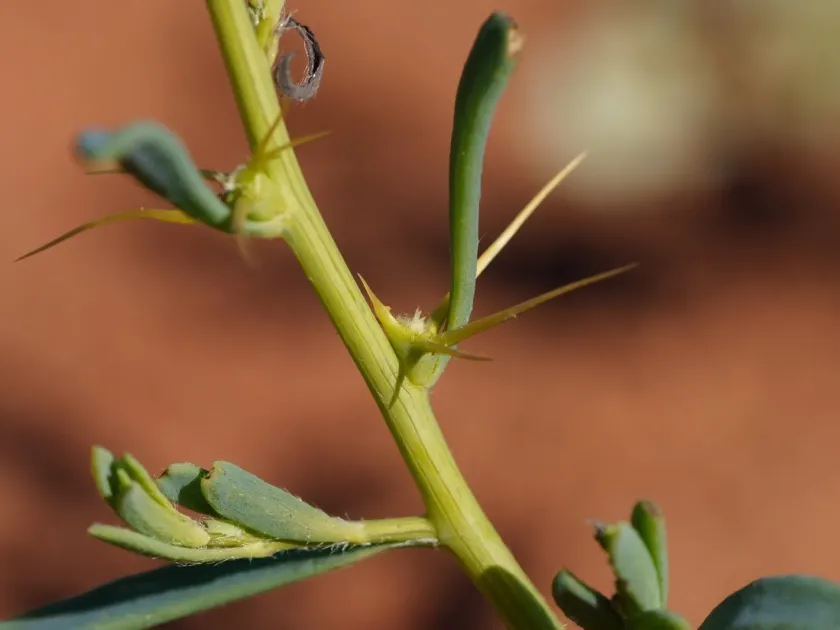
Description
Growing requirements
Black copperburr (Sclerolaena muricata) is a perennial subshrub belonging to the Amaranthaceae family. Native to Australia, this plant is remarkably well-adapted to the harsh environments of arid and semi-arid regions, thriving in areas where traditional forage crops cannot survive.
The species features a robust root system capable of accessing water at significant depths. Its foliage is covered with fine hairs, an evolutionary adaptation that significantly reduces water loss through transpiration, allowing the plant to maintain physiological stability during prolonged heatwaves.
The plant demonstrates high tolerance to poor-quality soils, including saline, sandy, and stony substrates. It is highly valued in land management for its ability to persist in disturbed or degraded soils, helping to prevent wind erosion in arid landscapes.
Climatic requirements are centered on high thermal sums and arid conditions. The plant is drought-adapted and cannot withstand prolonged waterlogging, which quickly compromises its root integrity and overall health. It prefers full sun exposure to maintain its vigorous growth patterns.
From an agricultural standpoint, Black copperburr serves as a supplemental forage source. While its burred fruits are a distinct feature, the vegetation is palatable to livestock, particularly sheep, providing essential nutrition in the dry season when more sensitive forage species are unavailable.
Main diseases and pests
Root rot is the primary threat to the health of Sclerolaena muricata stands, typically occurring when the soil remains too wet for extended periods. Proper site drainage is essential for cultivating this species successfully.
Pest pressure often comes from orthopteran insects, such as grasshoppers, which can cause significant defoliation. While the plant has some natural resistance due to its bitter secondary compounds, mass outbreaks can severely stunt its development.
Overgrazing poses a systemic risk to the persistence of copperburr populations. When the plants are grazed below their recovery threshold, they lack the energy reserves necessary to initiate new growth, leading to a decline in biodiversity within the pasture.
Weed competition is most problematic during the germination and seedling establishment phases. Establishing a stand requires initial weed management to ensure the young plants are not shaded out or outcompeted for nutrients by fast-growing annual weeds.
Wildfires and land management practices must be balanced carefully. While the species is somewhat fire-tolerant, repeated high-intensity fires combined with grazing pressure can lead to local extirpation of the plant if given insufficient time for seed bank renewal.