
Sclerolaena birchii
Sclerolaena birchii
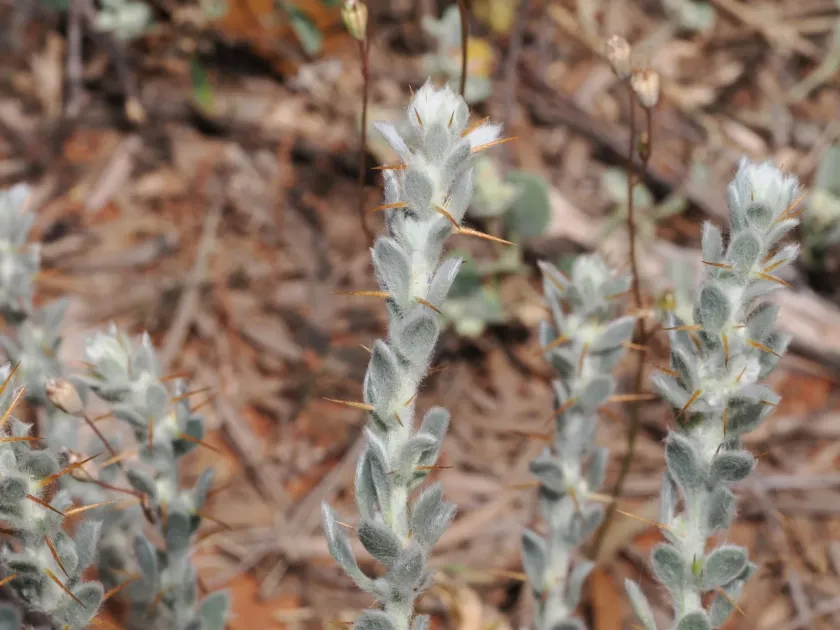
Description
Sowing dates
Sclerolaena birchii is native to Australia, and its natural regeneration and sowing cycles are closely tied to seasonal rainfall patterns. In natural rangelands, germination predominantly occurs following significant summer rain events.
Under artificial cultivation, sowing is carried out in warmed soil, as the seeds require specific temperature conditions to break dormancy. Ensuring good seed-to-soil contact is critical during the initial germination phase.
Sowing depth should be kept to a minimum due to the small size of the seeds. The optimal sowing window occurs just before the onset of the wet season, ensuring seedlings develop sufficient root systems before the extreme heat arrives.
Root development is rapid immediately after germination, which is a key survival mechanism in arid environments. Sowing operations require minimal soil disturbance to maintain the existing natural soil structure.
The species is prone to self-seeding, so when establishing perennial stands, it is often sufficient to create conditions that facilitate the natural dispersal of seeds by wind or livestock movement.
Growing requirements
This species belongs to the Amaranthaceae family (formerly Chenopodiaceae) and is adapted to harsh semi-desert conditions. It exhibits exceptional resistance to prolonged drought periods and saline soil conditions.
Preferred soil types for Sclerolaena birchii are light sandy or loamy soils with good drainage. The plant is capable of efficiently extracting moisture from deep soil horizons due to its well-developed taproot system.
The culture is photophilous and does not tolerate shading by other vegetation. It grows optimally in open areas where solar radiation remains at a maximum throughout the year.
Nutrient requirements are moderate; the plant can survive on impoverished substrates where other fodder crops would fail. Its nitrogen metabolism is optimized for low organic matter content.
The temperature range includes tolerance to both high summer temperatures and the moderate night frosts typical of inland continental climates.
Yield
The agricultural value of Sclerolaena birchii lies in its ability to provide green forage during periods when other pasture crops wither. The yield of green biomass depends directly on rainfall levels during the growing season.
In years with sufficient moisture, the productivity of rangelands occupied by this species increases significantly. The plant forms dense clumps that serve as a vital fodder source for sheep and cattle.
It is important to note that intensive grazing can lead to yield declines due to mechanical damage to the delicate stems. Rational range management allows for maintaining stable biomass output over many years.
Seed production is high, enabling the culture to quickly recover stand density even after drought cycles. A single bush can produce thousands of viable seeds.
Productivity assessments should account for the overall carrying capacity of the range to avoid soil degradation caused by excessive trampling.
Main diseases and pests
Sclerolaena birchii is relatively resistant to most traditional agricultural pests due to specific secondary metabolites in its tissues. However, it may be infested by various aphid species and grasshoppers during mass outbreaks.
The primary threat to populations is posed by invasive plant species that compete for limited water resources. Clearing plots of weeds is a mandatory agronomic practice.
Fungal diseases are rare and usually associated with prolonged waterlogging, which is uncharacteristic of its natural habitat. Mold development is only possible if root aeration is compromised.
Consumption of the spiny fruits by animals can cause micro-injuries to the oral mucosa of livestock. This is a biological defense mechanism of the plant against overgrazing.
Excessive grazing pressure is a major factor of biological stress that promotes the spread of secondary pests targeting weakened plants.
Harvesting
The primary method of utilization is direct grazing by livestock on natural or semi-managed rangelands. Mechanical harvesting for hay is rarely practiced due to the morphological structure of the bush.
If seed collection is required, it is done manually or using specialized vacuum harvesters after the fruits have fully matured. The optimal time is the end of the dry season.
After collection, seeds undergo a cleaning process to remove spiny appendages that impede sowing and transport. Storage should take place in dry, cool conditions to maintain seed viability.
Utilization as a fodder crop requires a rotational grazing system. This provides the plants with the necessary rest periods to accumulate nutrients and produce seeds for stand regeneration.
Monitoring plant health after each grazing phase is recommended to evaluate the culture’s capacity for rapid vegetative recovery.