
Sclerolaena tetracuspis
Sclerolaena tetracuspis
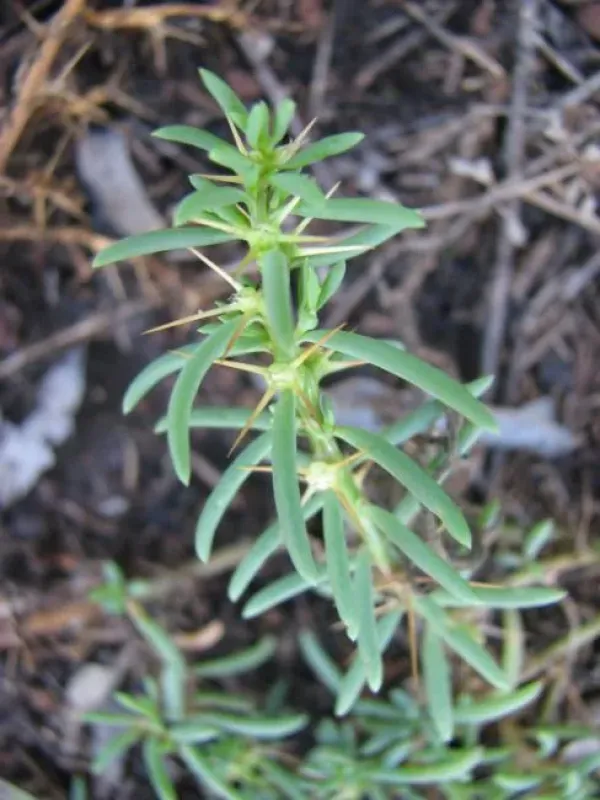
Description
Sowing dates
In its native habitat, Sclerolaena tetracuspis spreads primarily through natural seed dispersal after the fruit matures. For artificial cultivation, sowing is best performed in late winter or early spring to leverage the seasonal increase in moisture for germination.
Seed germination typically requires stable temperatures between 15 and 20 degrees Celsius. Seeds should be sown at a shallow depth of approximately 1–2 centimeters, ensuring they remain in contact with the soil while receiving enough light and oxygen for early development.
Soil preparation is critical for success. The area must be cleared of competitive weeds, as Sclerolaena seedlings are relatively slow to establish during their first few months of growth. Providing a weed-free seedbed significantly improves survival rates.
In large-scale rangeland restoration, direct drilling using specialized machinery is the preferred method. This technique allows for efficient sowing across rocky or degraded terrains where traditional tillage is not feasible.
The seeds of Sclerolaena tetracuspis possess high longevity, allowing them to remain viable in the soil for several years. This adaptive strategy allows the plant to wait for favorable weather cycles before germinating, making it highly resilient in volatile climates.
Growing requirements
Belonging to the Amaranthaceae family, specifically the Chenopodiaceae subfamily, this plant is evolutionary specialized for arid and semi-arid environments. It thrives in regions where most agricultural crops would perish due to lack of water.
The species is remarkably salt-tolerant, making it an excellent candidate for rehabilitating saline soils. It performs well on a variety of soil types, including loams and sandy substrates with alkaline pH levels.
Sunlight is an essential requirement for this plant; it requires full exposure to thrive and cannot tolerate shading from larger trees or invasive canopy species. Proper spacing during sowing is vital to ensure each plant receives sufficient solar radiation.
The root system of Sclerolaena tetracuspis is extensive and deep, which allows it to scavenge for sub-surface moisture. This structural adaptation is the primary reason the plant remains green during intense summer droughts.
Drainage is a critical factor in site selection. While the plant loves arid conditions, it is sensitive to waterlogging. Sites must have excellent drainage to prevent root rot, which is often fatal to the shrub in humid or poorly drained conditions.
Yield
Sclerolaena tetracuspis is valued primarily as a hardy fodder crop for livestock in arid zones. It provides a vital source of roughage and nutrients for sheep and cattle during periods when perennial grasses are dormant or dead.
Yield stability is dependent on management practices. While the plant does not offer high-volume yields like irrigated crops, it provides consistent year-round biomass that is essential for sustainable rangeland management.
The nutritional profile of the plant is sufficient for maintenance fodder. It contains minerals and proteins that help livestock survive through harsh winter or extreme summer conditions, ensuring better animal welfare in difficult landscapes.
Sustainable grazing is key to maintaining yield. Overgrazing can deplete the plant's carbohydrate reserves in the root system, preventing regrowth. A rotational grazing strategy is highly recommended to ensure the long-term productivity of the stand.
By effectively managing the grazing pressure, farmers can maintain a stable population of this shrub, creating a reliable fodder bank that improves the overall carrying capacity of the land over time.
Main diseases and pests
The most significant threat to the plant is unsustainable land management, particularly continuous overgrazing. When plants are eaten down too far, they lose their vigor and capacity to produce seeds for the next generation.
While the species is hardy, it can be susceptible to various leaf-feeding insects. These pests generally do not cause catastrophic damage under normal environmental conditions, but their impact can increase if the plants are already stressed by drought or disease.
Fungal pathogens affecting the root system are common when drainage is inadequate. Excess soil moisture leads to rotting of the root crown, which can kill individual plants and create bare patches in the grazing area.
Invasive weed species pose a constant challenge. Fast-growing annual weeds can outcompete Sclerolaena seedlings for moisture and nutrients, necessitating careful weed control in the initial establishment phase.
- Implement rotational grazing to prevent overgrazing.
- Ensure site selection favors well-draining soils.
- Monitor for weed encroachment during the first growing season.
- Periodically assess root health if stagnant water is observed.