
Two-horn copperburr
Sclerolaena bicornis
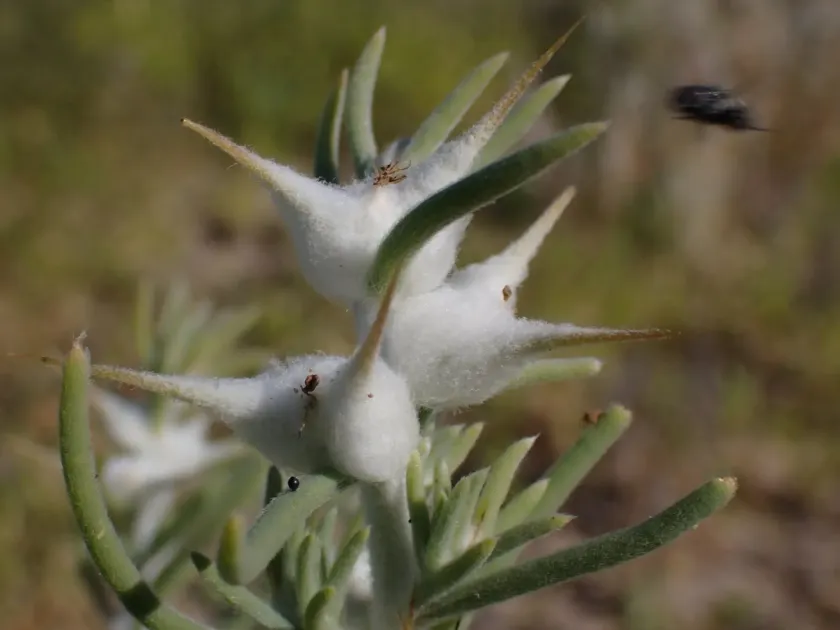
Description
Sowing dates
Sclerolaena bicornis, commonly known as two-horn copperburr, belongs to the Amaranthaceae family and is well-adapted to the harsh environments of arid Australia.
Sowing occurs naturally through seed dispersal following seasonal rainfall events, which trigger germination once soil moisture levels are sufficient.
For agricultural purposes, seeds are often broadcasted across pasture lands, requiring minimal soil disturbance to maintain the natural seed bank.
The plant exhibits high resilience, with seeds capable of remaining dormant in the soil for extended periods until environmental cues signal optimal growth conditions.
Placement of seeds at a shallow depth is critical to ensure that emerging sprouts can reach the surface without depleting their nutrient reserves.
Growing requirements
This species is highly tolerant of saline and alkaline soils, thriving in environments where sensitive forage crops would fail to establish.
Full sun exposure is a mandatory requirement for the development of Sclerolaena bicornis, as it is a characteristic component of open arid shrublands.
The plant demonstrates remarkable drought resistance, effectively managing its water use to survive prolonged periods of heat and moisture deficit.
Soil structure is less critical than drainage; the plant prefers well-drained substrates that prevent waterlogging around the root zone.
Nutrient requirements are modest, as the plant has evolved to extract necessary minerals from nutrient-poor soils common in semi-arid regions.
Yield
Yield capacity for Sclerolaena bicornis is directly proportional to the seasonal precipitation, providing essential forage when other plants have withered.
As a forage crop, it is highly valued by graziers for its ability to withstand constant browsing while maintaining vegetative growth.
Biomass production is generally low compared to intensive crops, but its reliability in extreme climatic conditions makes it an invaluable asset for livestock production.
The plant's nutritious stems and leaves provide necessary energy to grazing animals during the dry season, supporting herd health.
Strategic management of grazing pressure is essential to maximize the sustainable yield and ensure the long-term regeneration of the plant population.
Main diseases and pests
The primary threats include fungal diseases that manifest under conditions of high humidity, leading to root rot and premature decay of the plant.
Insect pests, particularly locusts and various grasshoppers, can cause significant defoliation if they occur in high densities during the growing season.
Overgrazing stands out as the most significant threat, as it reduces the plant's ability to produce seeds, thereby depleting the soil seed bank.
Competition from invasive weed species can also suppress the growth of two-horn copperburr, especially when land management practices are neglected.
Effective control measures focus on maintaining appropriate stocking rates and protecting areas from excessive soil compaction caused by livestock.