
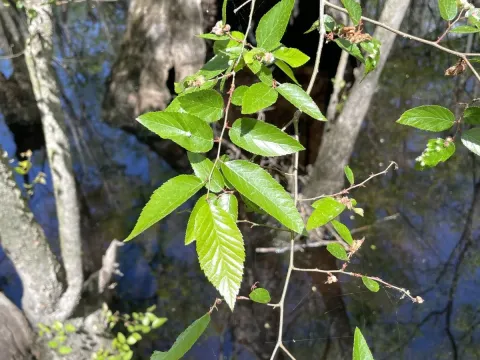
Water elm
Planera aquatica
Water elm (Planera aquatica) is a deciduous tree belonging to the Ulmaceae family. It is a monotypic genus, representing a distinct botanical lineage closely related to elms and zelkovas.
What the section contains
Water elm
The species is native to the southeastern United States, where it typically inhabits swamps, riverbanks, and floodplains. It is biologically evolved to thrive in standing water conditions.
The tree requires moist, rich, and heavy soils to flourish. It has a high tolerance for waterlogged environments, making it an excellent candidate for stabilizing sensitive riparian zones.
Regarding climate, it prefers warm, humid environments. While it can withstand occasional dry spells, consistent hydration is crucial for maintaining the tree's health and aesthetic appeal.
Commercially, the water elm is rarely harvested for timber due to its limited range and slow growth rate, but it is highly valued for ornamental purposes in water gardens and parks.
The most common issues affecting this tree include fungal diseases related to excessive humidity and pathogens that thrive in damp, stagnant environments within the canopy.
Insect pests, particularly leaf miners and various types of aphids, can impact the vigor of the tree during the spring season if the population density becomes too high.
Environmental stress is a major threat, especially when the natural hydrology of its planting site is altered, leading to root rot or severe susceptibility to secondary pests.
Implementation of integrated pest management is advised to protect the trees without disrupting the surrounding aquatic wildlife that often coexists with these plantings.
Careful monitoring of the leaf surface and bark integrity is essential to identify early symptoms of decay, ensuring the longevity of the tree in a landscape setting.