
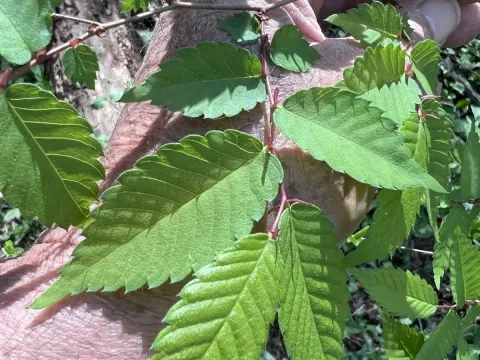
Zelkova
Zelkova
Zelkova is a genus of deciduous trees belonging to the Ulmaceae family. Native to regions in Southern Europe and East Asia, these trees are recognized for their structural beauty, durability, and resilience, making them a popular choice in both forestry and landscape architecture.
What the section contains


Zelkova
Optimal growth requires deep, well-draining, and nutrient-rich soils. While the trees exhibit a degree of soil pH flexibility, they thrive best in loamy, slightly acidic to neutral environments. Proper site selection is vital, as the trees require ample space for root development.
Regarding climate, Zelkova species generally prefer temperate zones with moderate rainfall. Once established, many varieties demonstrate significant drought tolerance, though young trees must be irrigated consistently during the first few growing seasons to ensure survival and structural integrity.
Agronomic practices for Zelkova include structured pruning to prevent the development of weak branch attachments. During the planting phase, providing a balanced, slow-release fertilizer and organic mulch can significantly improve the establishment rate and the overall growth vigor.
The economic value of Zelkova lies in its high-quality timber, which is dense, decay-resistant, and aesthetically pleasing. Besides timber, these trees are increasingly valued in urban agriculture for their ability to tolerate pollution and improve air quality in metropolitan settings.
Zelkova trees are susceptible to several fungal diseases, including cankers and leaf spot fungi. These pathogens often thrive in conditions of high humidity and poor air circulation within the tree canopy, necessitating careful spacing and regular sanitation pruning.
Insect pests, such as aphids, scale insects, and spider mites, frequently target the foliage and sap of the tree. These pests not only weaken the plant through sap-feeding but can also secrete honeydew, which promotes the growth of sooty mold, further reducing photosynthetic efficiency.
Boring insects represent a specific threat to the trunk and main branches of the tree. Effective management involves maintaining tree vigor through proper fertilization and watering, as healthy trees are better equipped to naturally deter and compartmentalize internal damage.
To mitigate the risk of pest outbreaks, integrated pest management (IPM) strategies should be implemented. This includes the use of beneficial predatory insects and the strategic application of horticultural oils or systemic insecticides when infestation levels exceed economic thresholds.
Soil-borne pathogens resulting from poor drainage pose a threat to the root system, often manifesting as root rot. Improving soil structure through amendments and ensuring the planting depth is correct can prevent these critical physiological stresses during the tree's development.