
Hybrid elm
Ulmus hybrids
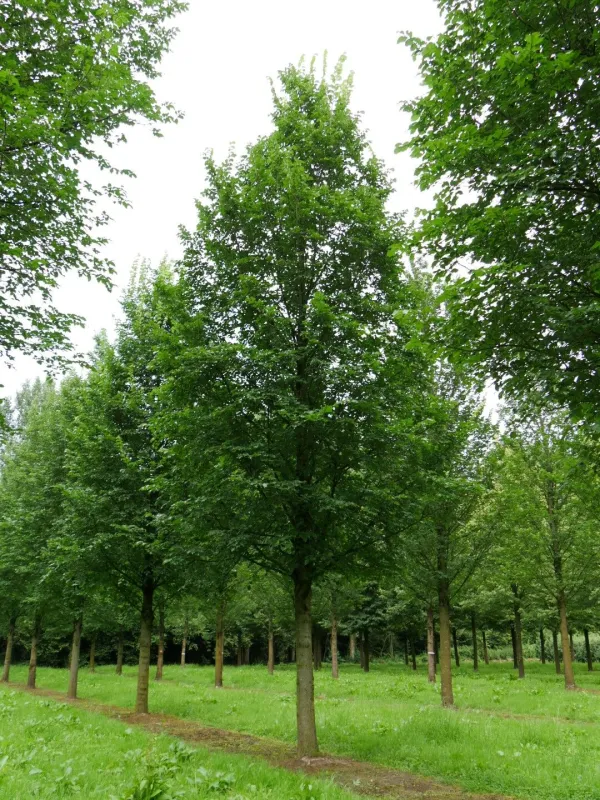
Description
Growing requirements
Hybrid elm (Ulmus hybrids) refers to cultivars within the Ulmaceae family, developed primarily to resist Dutch elm disease. These trees combine the rapid growth of specific species with enhanced environmental resilience.
The trees thrive in temperate climates, showing significant tolerance to diverse soil types, provided they are well-drained. They prefer sunny locations where they can express their full architectural potential.
For optimal development, hybrid elms require deep, nutrient-rich soils. While they are relatively drought-tolerant once established, supplemental irrigation during extreme dry spells significantly improves their vigor.
Proper silvicultural management involves periodic pruning to maintain structural integrity. This prevents heavy branches from splitting during severe weather and promotes a balanced canopy shape.
In practice, hybrid elms are invaluable for urban landscaping, windbreaks, and erosion control. Their robust root systems help stabilize soil, while their leaves effectively trap atmospheric pollutants.
Main diseases and pests
The primary concern for all Ulmus species, including hybrids, is Dutch elm disease caused by Ophiostoma fungi. Although some hybrids are genetically resistant, no variety is completely immune.
The elm leaf beetle is a significant pest that defoliates trees during the summer. Integrated pest management strategies, including the use of biological controls, are recommended for large-scale plantings.
Boring insects, such as bark beetles, pose a threat by disrupting nutrient transport under the bark. Maintaining tree health through fertilization and thinning prevents these pests from finding weakened hosts.
Fungal infections of the foliage, such as black spot, can occur in humid years. Ensuring proper air circulation within the canopy through thinning helps reduce the prevalence of these issues.
Regular sanitation programs are vital. Removing infected limbs and clearing leaf litter beneath the trees prevents the accumulation of inoculum and overwintering sites for insects.