
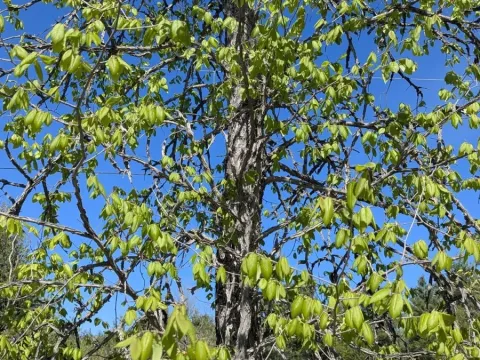
Rock elm
Ulmus thomasii
The Rock Elm (Ulmus thomasii), belonging to the Ulmaceae family, is a valuable forestry tree that requires specific sowing techniques to ensure successful germination.
What the section contains
Rock elm
Seeds should be sown immediately after collection in late spring, as they possess a short lifespan and are prone to losing viability if stored for extended periods.
The sowing depth should be maintained at approximately 1-1.5 cm in well-prepared, loose soil to facilitate the emergence of vigorous seedlings.
To improve germination rates, some growers apply a stratification process, placing seeds in cold storage to break dormancy before spring planting.
Sufficient soil moisture must be provided during the initial phase of development, as young seedlings are particularly sensitive to drought and environmental stress.
Rock Elm thrives in deep, fertile, and well-drained soils, often showing a preference for limestone-rich sites which support its robust growth patterns.
The species is known for its high level of cold hardiness, allowing it to adapt to various climates while maintaining healthy vegetative development throughout the season.
Proper light management is essential; while young trees can tolerate partial shade, the species performs best under full sun conditions as it matures.
Waterlogging must be strictly avoided, as the tree’s root system is susceptible to decay in stagnant water, which can lead to significant physiological decline.
Standard agronomic care involves regular monitoring of soil nutrients and ensuring that weeds do not compete with the developing tree for water and light resources.
The primary threat to Ulmus thomasii, as with most elms, is Dutch Elm Disease, caused by the fungus Ophiostoma ulmi, which is devastating to mature stands.
The pathogen is primarily transmitted by bark beetles, which create galleries in the wood and introduce fungal spores directly into the tree's vascular system.
Defoliating insects can also pose a serious problem by reducing the photosynthetic surface area, thereby weakening the tree's natural defense mechanisms against pathogens.
- Regular inspection for signs of bark beetle activity and early wilt.
- Application of systemic fungicides to prevent early-stage infection.
- Sanitary pruning of dead or infected branches to curb fungal spread.
- Maintaining tree vigor through appropriate fertilization and site management.
Integrated Pest Management (IPM) strategies are crucial for maintaining the health of elm plantations and reducing the dependency on heavy chemical treatments.
Rock Elm wood is highly regarded for its exceptional hardness, durability, and shock resistance, making it a premium material for various industrial applications.
Harvesting usually occurs when the trees reach maturity, providing timber that is ideal for tool handles, furniture, and heavy-duty structural components.
The forestry sector values this species not only for its timber but also for its resilience and ability to contribute to forest ecosystem restoration.
Seed collection is performed at the peak of maturity to ensure that the gathered material retains high energy for subsequent plantation cycles.
Beyond industrial timber, the Rock Elm serves as a critical genetic resource for research into disease-resistant elm varieties, supporting long-term biodiversity goals.