
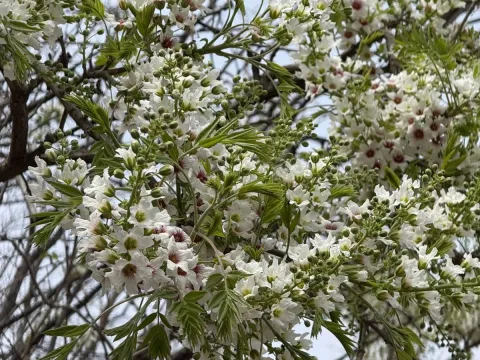
Xanthoceras
Xanthoceras
Xanthoceras sorbifolium is primarily propagated by seeds, which require stratification for 60–90 days at low positive temperatures to break dormancy. Sowing can be carried out in autumn for natural winter stratification or in spring following artificial cold treatment in controlled environments.
What the section contains
Xanthoceras
For spring sowing, maintaining high substrate moisture is critical, as the seeds possess a hard coat that requires adequate hydration for uniform germination. Seeds should be sown at a depth of 3–5 centimeters depending on soil texture to ensure proper development of the taproot.
Seedlings show vigorous growth in their first year but are sensitive to root disturbance due to a delicate taproot system, making early transplanting with a soil ball essential. In commercial orchards, containerized propagation is recommended to improve establishment success rates on the final planting site.
The optimal planting time for seedlings is early spring before bud break or late autumn, allowing enough time for root adjustment before hard frost. Spacing should be at least 4–5 meters apart to accommodate the tree's broad canopy as it matures.
Vegetative propagation via root cuttings is possible but requires high-tech nursery facilities such as mist propagation systems. The use of rooting hormones significantly enhances the success rate when working with woody cuttings of this species.
Xanthoceras belongs to the Sapindaceae family and is recognized for its exceptional drought tolerance and adaptability to extreme temperatures. It can withstand extended dry periods by managing its water resources efficiently, making it a viable crop for regions with hot, arid, or semi-arid climates.
The species prefers sites with full sun exposure; lack of light leads to elongated growth and poor flowering, which negatively impacts fruit yield. Southern and southwestern slopes are ideal locations as they provide better drainage and soil warming, which are crucial for the tree's health.
Soil requirements focus on excellent aeration and drainage, as the species is highly sensitive to waterlogged conditions that can cause root rot. Deep, loose, sandy loams or light silty soils with a neutral to slightly alkaline pH are considered the best growing media.
The tree exhibits high cold hardiness, with mature specimens capable of surviving temperatures as low as -30 degrees Celsius. However, young trees require winter protection, including mulch around the base and potential trunk wrapping to prevent sunscald and frost damage during their establishment years.
Fertilization management should emphasize potassium-based nutrients, which assist in wood maturation and enhance the tree's overall resistance to environmental stresses. Regular monitoring of nutrient levels ensures optimal growth of both foliage and reproductive buds during the spring season.
The onset of fruiting varies by propagation method: seedlings typically start bearing fruit in 4–5 years, while grafted trees may produce a harvest as early as the third year. Commercial yields usually become consistent when the trees reach 8–10 years of age.
A well-maintained mature tree can yield up to 10–15 kilograms of nuts per year, which are prized for their high nutritional profile. The kernels are rich in vegetable fats, proteins, and essential micronutrients, serving as a high-value commodity for the food and cosmetic industries.
The high oil content of the kernels makes them an excellent source for premium culinary oil, which is comparable to olive oil in its sensory characteristics. Yellowhorn oil is noted for its stability and neutral flavor profile, making it a sought-after product in the specialty food market.
Consistent production is maintained through annual pruning to remove deadwood and open the canopy for better air circulation and light penetration. Thinning the crop load in heavy years can help prevent alternate bearing and promote the production of larger, more uniform nuts.
Overall plantation productivity relies on proper orchard management and ensuring cross-pollination. Planting multiple varieties together in one orchard significantly increases fruit set and maximizes the total harvest volume across the entire farm.
Yellowhorn is generally resistant to many common diseases affecting temperate fruit crops, which reduces the need for frequent fungicide applications. The most common threats are often associated with poor drainage, which can lead to fungal pathogens attacking the root system.
Pests can include aphids or leaf-eating insects during the active growing season, particularly if the garden ecosystem lacks sufficient biodiversity or during periods of heat stress. Integrated pest management strategies, such as encouraging natural predators, are usually sufficient to keep populations in check.
In humid regions, powdery mildew may develop on leaves if the canopy is too dense to allow for proper airflow. Preventive cultural practices, such as maintaining weed-free zones around the base and following recommended spacing guidelines, are essential for canopy health.
Rodents can be a significant threat in winter, often gnawing on the bark of younger trees. Using physical barriers like wire mesh or specialized trunk guards is a necessary maintenance task for orchards located in areas with high rodent populations.
Despite these minor risks, the species is considered a low-maintenance crop for commercial farming. With proper site selection and basic horticultural practices, these trees can maintain high levels of productivity for several decades.
Harvesting usually takes place in late August or September, when the seed capsules begin to split naturally, signaling the seeds have reached full maturity. Timing is crucial, as delayed harvest can result in nuts dropping to the ground, increasing labor costs for collection.
The harvest method involves manually picking the fruits or gently shaking them onto tarps spread beneath the trees to prevent damage. Collecting fruits in dry weather is vital to ensure long-term storability and prevent mold growth during the drying process.
After collection, the fruits must be hulled and dried in a well-ventilated area away from direct sunlight. Achieving a kernel moisture content of 7–9 percent is essential to ensure the longevity of the harvest and prevent the degradation of oils.
Small-scale mechanical nutcrackers are often used to process the harvest efficiently without damaging the delicate kernels. Grading the nuts by size and quality further enhances the market value of the yield for processors and end consumers.
Stored kernels should be kept in airtight containers in a cool, dark place to prevent fat oxidation and rancidity. When properly stored, yellowhorn nuts retain their nutritional and flavor properties, making them a shelf-stable product for the retail market.