
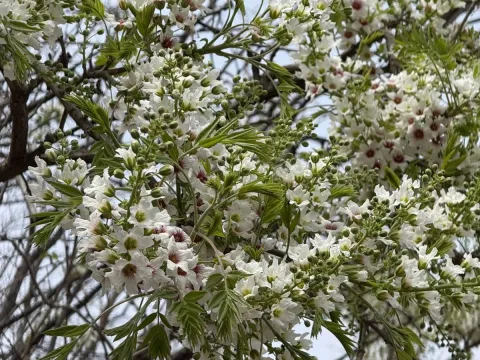
Yellowhorn
Xanthoceras Bunge
Sowing Yellowhorn seeds is best done in autumn immediately after harvest to allow for natural cold stratification in the soil. If sowing in spring, seeds must be artificially stratified at temperatures between 0 and 5°C for 60 to 90 days to break dormancy.
What the section contains

Yellowhorn
Seeds should be planted at a depth of 4–6 cm in well-drained, loose soil. Maintaining consistent moisture is crucial during the germination phase, though waterlogging must be avoided to prevent seed rot.
Seedlings exhibit slow initial growth as they primarily focus on developing a deep taproot system. Because of this, it is recommended to transplant them to their permanent location as early as possible to minimize root disturbance.
Vegetative propagation can be achieved through root cuttings taken during the dormant season. This method is preferred for preserving specific cultivar traits and ensures that the plant enters the fruit-bearing phase earlier than those grown from seeds.
For orchard or garden planting, a spacing of 4x4 or 5x5 meters is optimal, providing sufficient room for the tree to develop its characteristic broad and attractive crown.
Yellowhorn (Xanthoceras sorbifolium) is a unique, hardy deciduous shrub or small tree belonging to the Sapindaceae family. It is prized for both its edible seeds and its spectacular white flowers with contrasting centers.
The plant thrives in full sun and requires exposure to direct light for optimal growth and flowering. It is highly drought-tolerant once established but needs a sheltered location to protect it from harsh, drying winds.
While adaptable to various soil types, Yellowhorn performs best in deep, fertile, sandy, or loamy soils with a neutral to slightly alkaline pH. Good drainage is the most critical soil requirement for the tree's long-term health.
Maintenance involves routine weeding and shallow cultivation around the base of the plant during its juvenile years. Mature trees require minimal intervention and are exceptionally resistant to extreme winter temperatures.
Supplementary watering is mainly necessary during prolonged summer droughts or the fruit-development stage. Otherwise, the tree’s deep root system efficiently taps into subsoil moisture.
Trees typically begin bearing fruit between the 4th and 6th year after planting. A healthy, mature tree can produce between 5 and 10 kg of nuts annually, depending on climate and cultivation practices.
The fruits are leathery capsules containing round seeds that are rich in high-quality vegetable oil. The kernels are edible and have a pleasant, nut-like flavor, often described as similar to hazelnut or almond.
Yellowhorn oil is highly valued for its chemical composition, which is remarkably similar to olive oil. It is extensively used in the food industry, as well as in the production of cosmetics and medicinal supplies.
To maximize yields, it is recommended to plant several individuals in proximity to facilitate cross-pollination. Insufficient pollination is a common reason for poor fruit set in solitary trees.
Productivity remains relatively consistent over the tree's lifespan. Harvesting should be timed carefully as the fruit capsules ripen, ensuring that seeds are collected before they fall or are consumed by wildlife.
Yellowhorn is remarkably resistant to most common garden pests and diseases. Its natural chemical profile and high phytoncide levels make it generally unappealing to many herbivorous insects and pathogens.
The most significant threat to the tree is root rot, caused by soil-borne fungal pathogens when growing in waterlogged conditions. Ensuring proper drainage is the most effective preventative measure against this condition.
In humid, cool weather, plants may occasionally show signs of powdery mildew. Treatment with appropriate fungicides or biological control agents is effective if applied at the first sign of infection.
Young shoots can sometimes be affected by aphids, but these outbreaks are rarely severe enough to harm the structural integrity of a mature tree. Mild insecticidal soap applications are usually sufficient for control.
Rodents may cause damage by stripping bark during the winter months. Using protective wire guards or trunk wraps during the plant's early years is a recommended practice to avoid mechanical damage.
The harvest season generally occurs in late summer or early autumn when the fruit capsules turn brown and begin to split open. This indicates that the seeds inside are fully mature and ready for collection.
Harvesting is typically performed by hand, either by picking the capsules from the branches or gathering the fallen fruit from beneath the tree. The collected nuts should be cleaned and inspected immediately.
Proper post-harvest drying is essential to prevent mold growth. Nuts should be spread in a cool, well-ventilated area for several weeks to reduce moisture content before long-term storage.
Once dried, the nuts can be stored in a cool, dry environment in breathable containers. Properly stored seeds retain their nutritional value and flavor for up to 18 months.
For those interested in seed extraction, simple manual cracking methods are sufficient. Given the high oil content of the seeds, keeping them away from direct sunlight and heat is important for maintaining oil quality.