
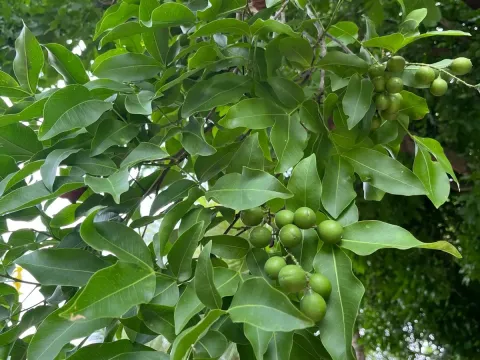
Melicoccus bijugatus
Melicoccus bijugatus Jacq.
Propagation of Melicoccus bijugatus is primarily achieved through seeds extracted from ripe, fresh fruits. Since seeds lose viability rapidly, sowing should take place immediately after harvest to ensure high germination rates.
What the section contains
Melicoccus bijugatus
The seeds are planted in well-drained, nutrient-rich soil mixtures at a depth of approximately 2 to 3 centimeters. Under warm, moist conditions, germination typically occurs within 3 to 4 weeks of planting.
In professional nurseries, seedlings are often nurtured under partial shade to protect them from intense sunlight. As the plants grow, they are gradually exposed to full sun to harden them for outdoor transplanting.
For improved orchard uniformity, vegetative propagation techniques like budding or grafting are employed. These methods allow growers to propagate superior, high-yielding, or large-fruited cultivars true to their type.
The timing of sowing often aligns with the onset of the rainy season, which provides the necessary moisture for the developing root systems during the most vulnerable stage of the plant's life cycle.
Melicoccus bijugatus belongs to the Sapindaceae family and is native to the tropical Americas. It thrives in hot, humid climates and is well-suited for lowland areas at altitudes below 1,000 meters.
This species is highly adaptable to various soil types, ranging from sandy soils to heavier clay soils, provided that they are well-drained. It demonstrates significant tolerance to periodic drought, making it suitable for regions with seasonal rainfall patterns.
Optimal sunlight is essential for productive tree growth and fruit development. Trees grown in open spaces with full solar exposure generally exhibit superior crown density and higher fruit yields compared to those in shaded environments.
The crop is extremely sensitive to frost and freezing temperatures, which can severely damage or kill the tree. It prefers steady tropical temperatures, typically between 24 and 28 degrees Celsius for best performance.
The tree develops a strong, deep taproot system, which contributes to its notable wind resistance, a critical trait for surviving in regions prone to tropical storms.
The time to reach fruit-bearing age varies significantly; seed-grown trees usually take between 6 to 10 years to produce their first crop, while grafted trees may begin fruiting within 4 years.
Mature, healthy trees are highly productive, capable of yielding several hundred kilograms of fruit per season. The fruits are borne in large, dense clusters, which are a characteristic feature of this species.
The fruit has a thin, leathery skin protecting a translucent, jelly-like pulp. While the taste profile varies between cultivars, high-quality fruit is prized for its balance of sweetness and tartness.
Yield stability can be influenced by weather conditions during the flowering phase. Adequate irrigation during extreme dry spells can mitigate the risk of premature fruit drop and improve overall harvest consistency.
Strategic pruning is often practiced to manage the height of the tree, which not only keeps the fruit within reach for manual harvesting but also promotes better light penetration and airflow throughout the canopy.
Melicoccus bijugatus is generally robust; however, it can be susceptible to fungal diseases such as anthracnose, particularly in environments with poor air circulation and excessive humidity within the canopy.
Pests such as scale insects and mealybugs can infest the foliage and young twigs, potentially weakening the plant if infestations become severe. These are typically managed through biological controls or targeted sprays.
Fruit flies pose a major threat to the crop as the fruit approaches maturity. Integrated pest management (IPM) strategies, including the use of pheromone traps and netting, are recommended for commercial orchards.
Root diseases are rare, provided the site has proper drainage. Avoiding waterlogging is essential to maintaining root health and preventing the development of soil-borne pathogens.
Maintaining a clean orchard floor and performing regular sanitation pruning to remove dead or diseased branches are key components of a successful disease management program.
Harvesting is performed exclusively by hand. Because the fruits are easily bruised or damaged, harvesters carefully clip entire clusters from the branches rather than pulling them off individual trees.
The timing of the harvest is critical; fruits must be picked when fully ripe, as they do not undergo significant ripening once detached from the tree. Color change serves as the primary indicator for maturity.
After collection, fruits should be handled delicately and placed in ventilated containers. Proper airflow during storage is vital to prevent the rapid onset of spoilage, which is common in this moisture-rich fruit.
The shelf life of the fresh fruit is relatively short, usually lasting only a few days at ambient room temperature. As a result, the fruit is typically sold in local markets immediately after harvest.
Value-added products, including bottled juices and jams, are becoming increasingly popular. These processing methods extend the product's availability and provide additional income opportunities for local growers.